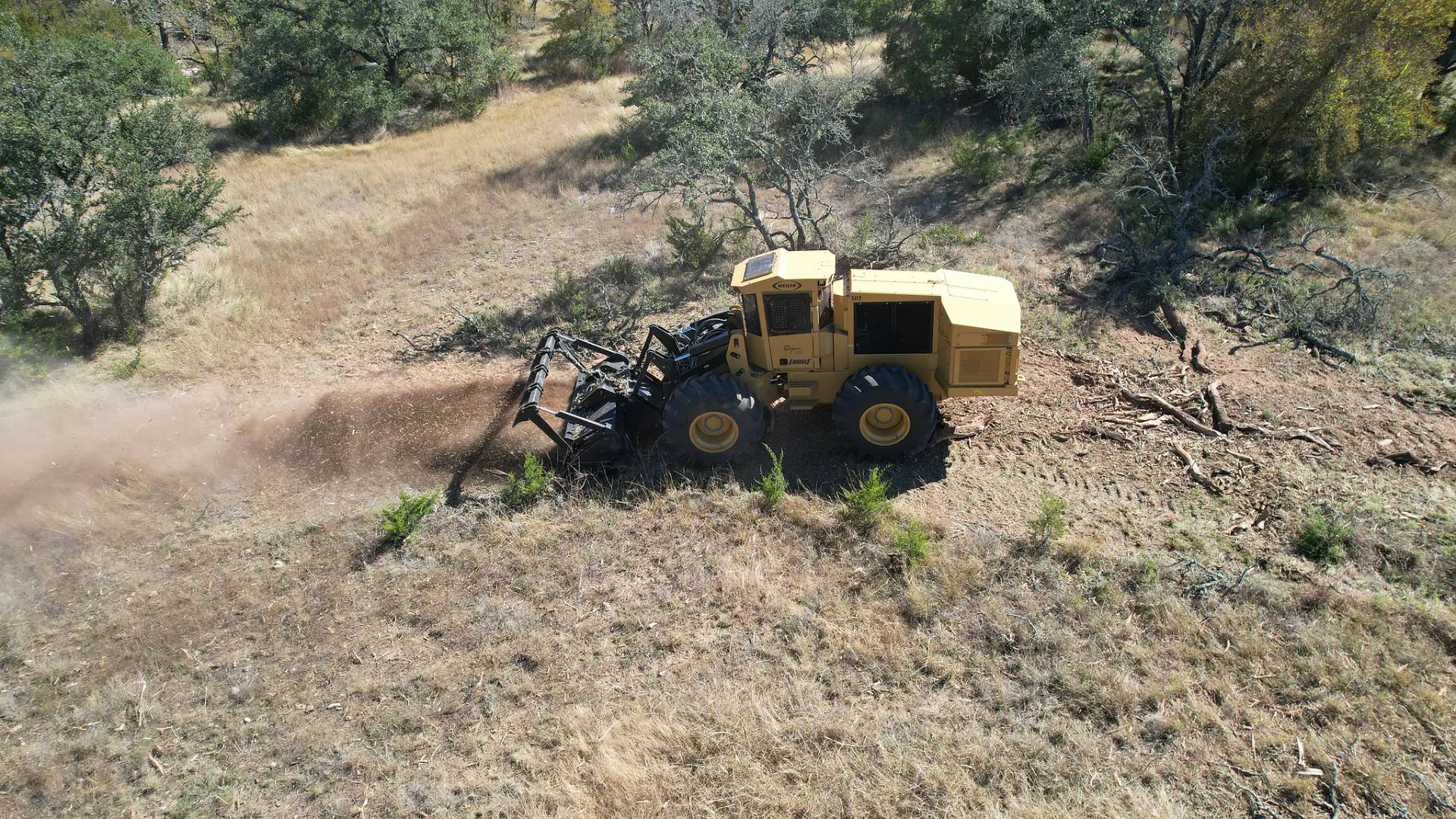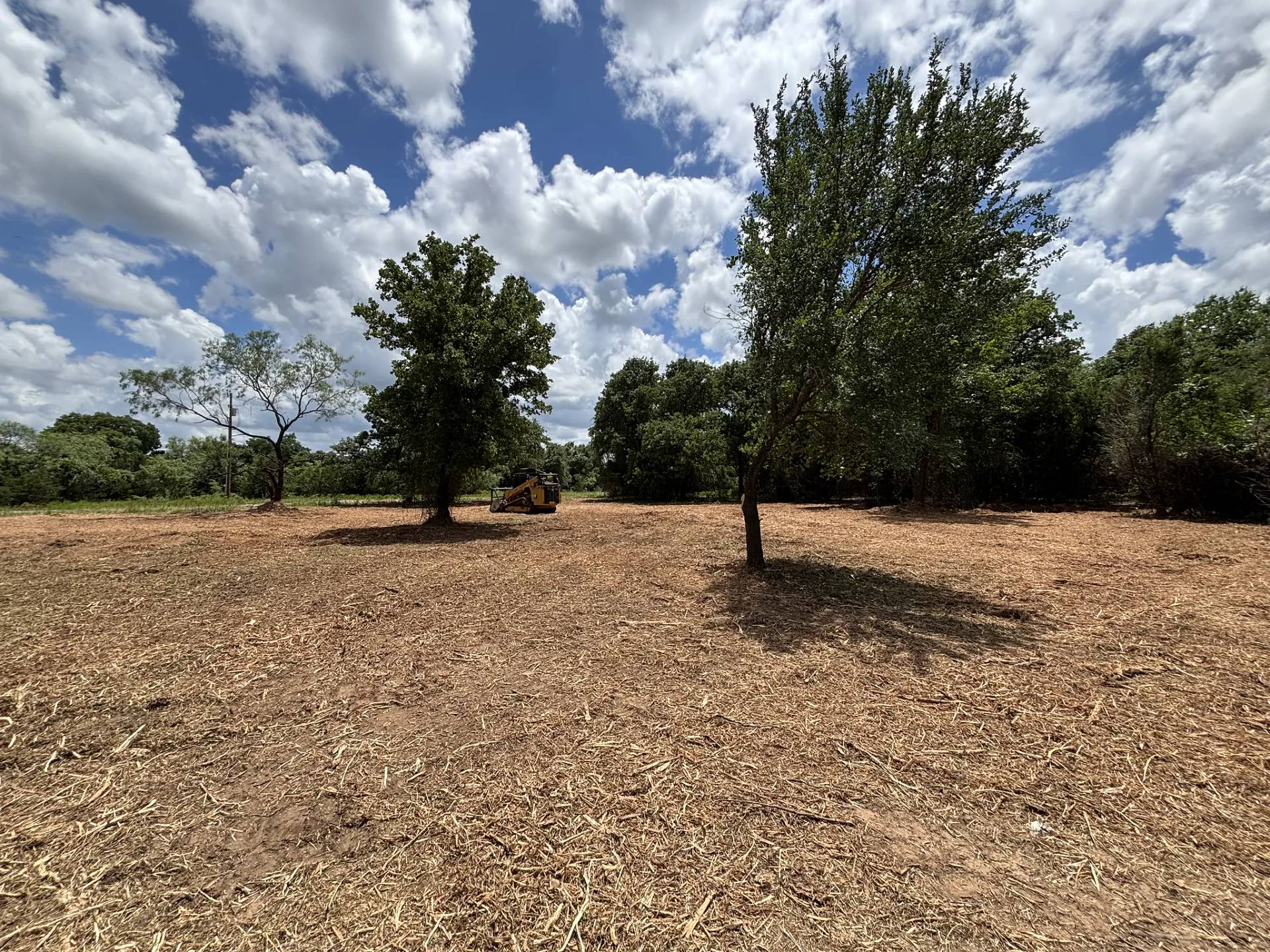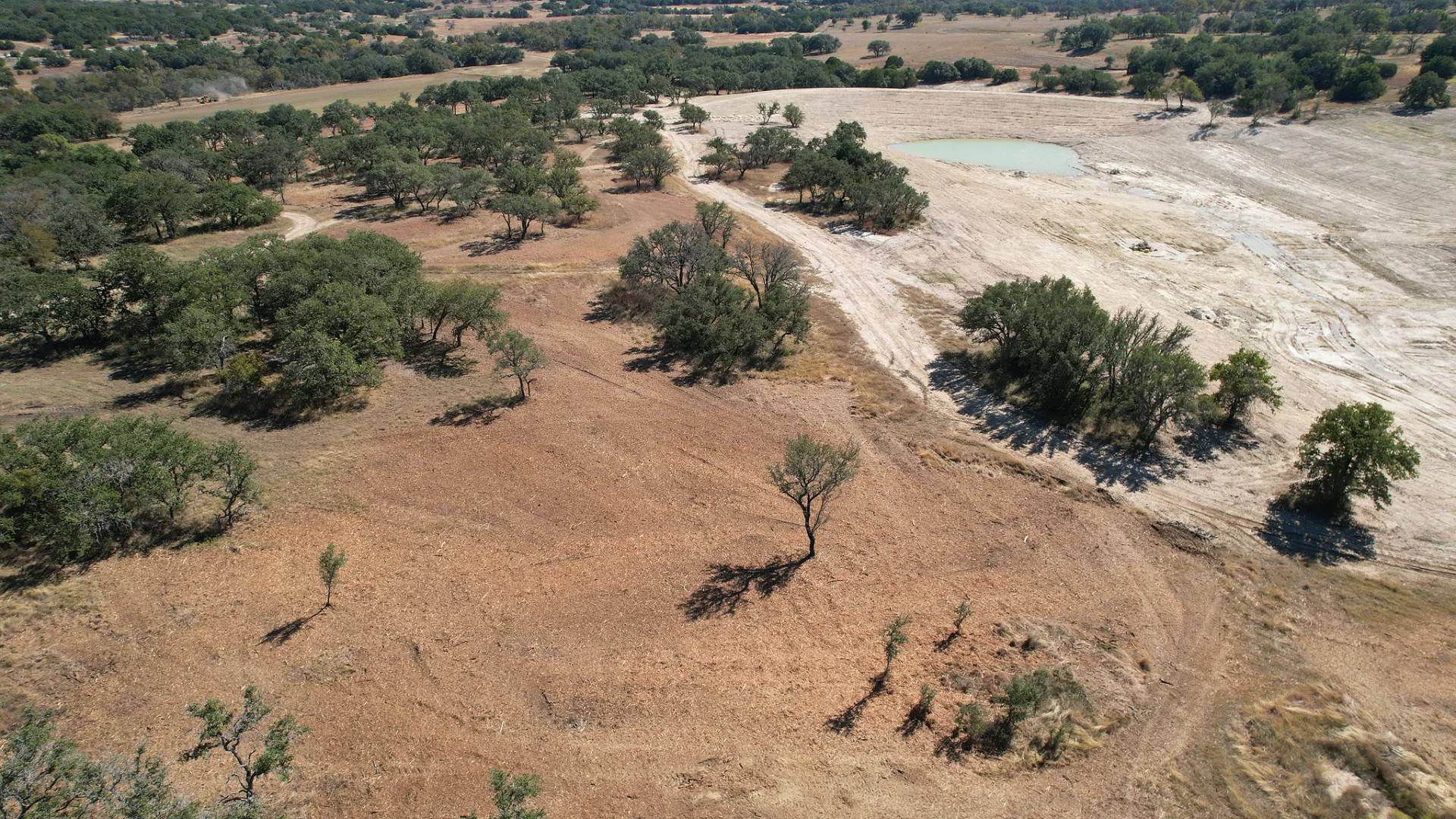
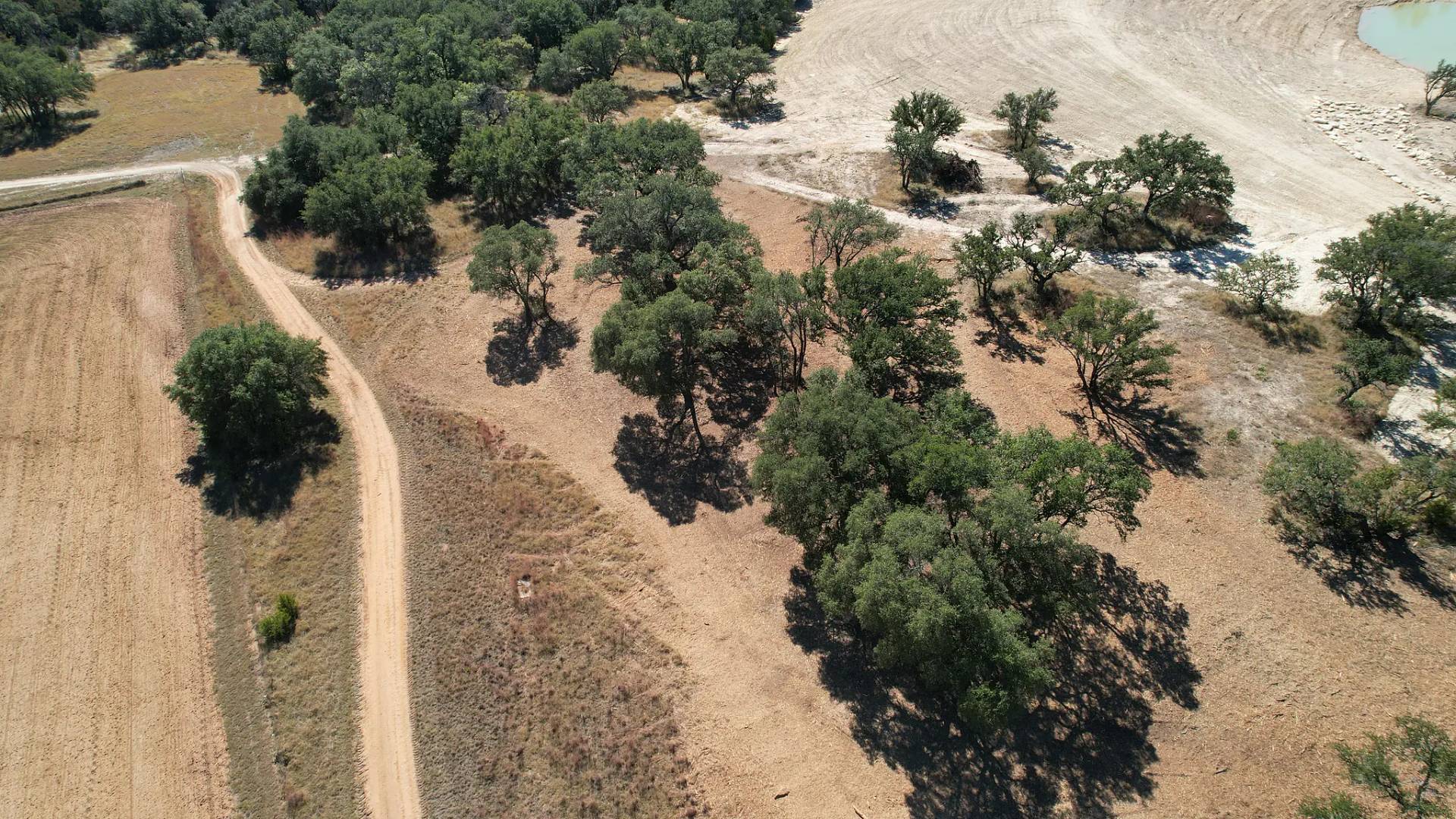
Hamilton County is rolling prairie broken up by flat-topped buttes, with wide creek valleys between them and limestone cliffs along the valley sides. It's livestock country first, with cattle, goats and dairies, and a lot of it is also hunted for white-tailed deer. Double L does land clearing and forestry mulching across the county, around Hico, Hamilton and the ranch roads between.
Where the cedar and brush take hold
Cedar grows up the sides of the buttes and down into the draws, and mesquite and prickly pear work their way into the prairie pasture. The county's woods are pecan, live oak, elm, cedar and post oak, and the northwest corner runs into the sandier Western Cross Timbers. The Bosque River runs past Hico in the northeast, while the Leon River, Cowhouse Creek and Pecan Creek, whose valley Hamilton sits in, drain the rest. The bottoms along those streams grow up in brush under big pecans, and that's often the best ground on the place once it's opened back up.
Hico, Hamilton and the country between
Hico sits in the northeast corner where US 281 meets Highways 6 and 220, near the Bosque River, and it has been a cattle and cotton market town since the 1800s. Hamilton, the county seat, is in the middle of the county where US 281 crosses Highways 22 and 36. Between and around them, the ranch roads run up onto the buttes and down into the valleys, and the clearing changes with the ground: limestone breaks and cedar on the slopes, deeper soil and mesquite on the valley floors.
In the sandier northwest corner, toward the Cross Timbers, the ground is easier on equipment, and post oak with a brushy understory replaces the cedar breaks. There, clearing is more often about opening up the woods under the oaks than taking trees off a hillside.