Call or text anytimeMeridian, TX · Bosque CountyFacebookYouTubeInstagram
Double L Land Management LLC (254) 267-0626Free quote
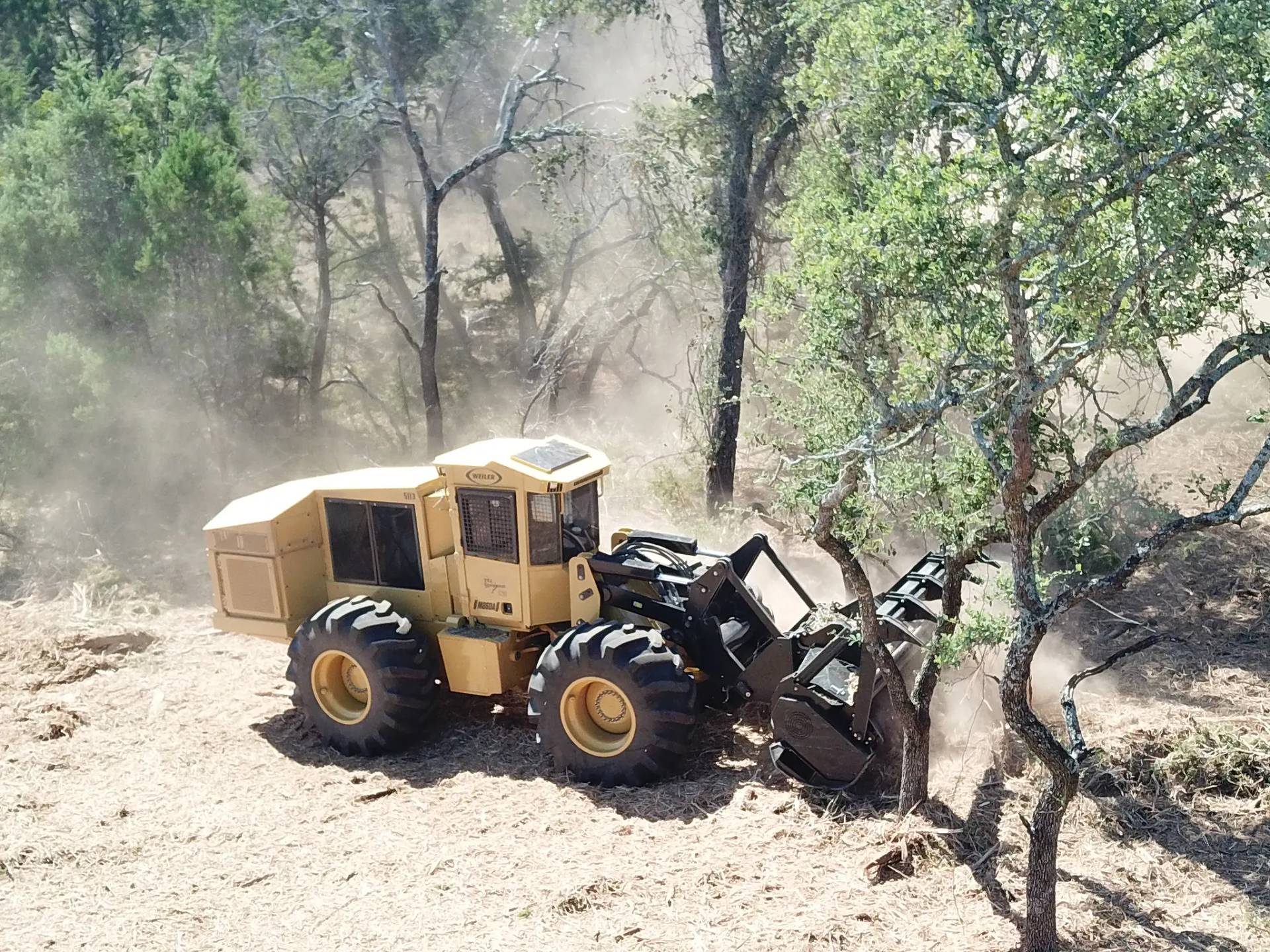
A Double L forestry mulcher pushing into brush on pale sandy ground, dust rising around the machine

Land clearing and forestry mulching in Comanche County, TX

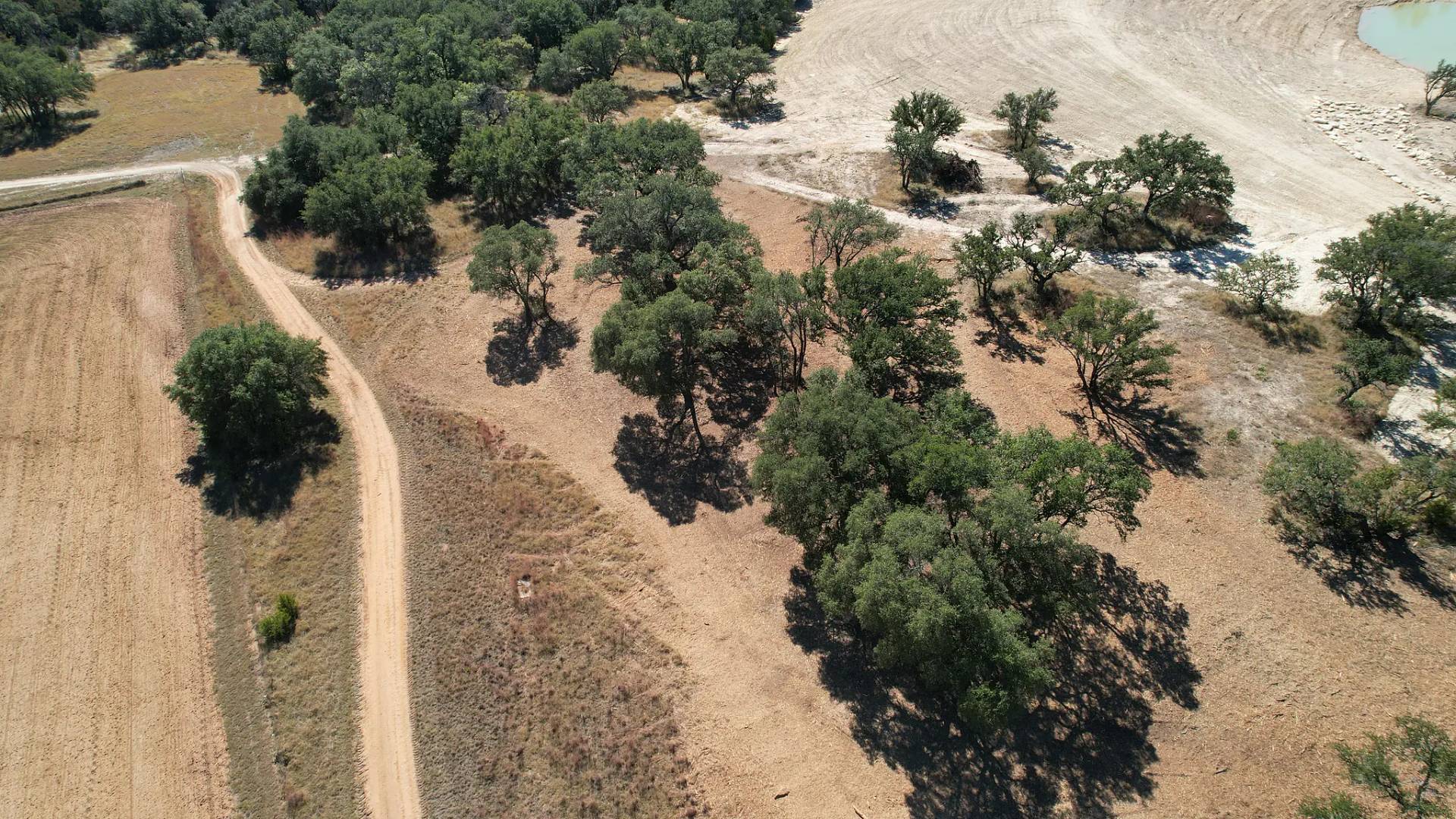
Field edges and fence rows on Leon River farm ground.

Double L Land Management clears mesquite, cedar and brush across Comanche County, TX, around Comanche, De Leon, Gustine and Proctor Lake. We push brush back off fields and fence rows, reopen pasture and clear under pecans.

Fully insured · all-new fleet · Weiler M860A mulchers · CAT 320 excavators

Comanche County is farm and ranch ground on the Leon River, split between Western Cross Timbers sand to the north and the edge of the Grand Prairie to the south. Double L Land Management does land clearing across the county, around Comanche, De Leon, Gustine and Proctor Lake, taking mesquite, cedar and brush off pasture, fence rows and field edges. Where you want trees kept, we use forestry mulching to take out the understory and leave the oaks and pecans standing.

Sand to the north, dark soil to the south

The northern part of the county lies in the Western Cross Timbers, with light sandy and loamy soils carrying cedar, oaks, mesquite and pecans. The southern part is the southern edge of the Grand Prairie, where the soils turn dark and waxy. The North and South Leon rivers drain it all toward the Brazos, with the Sabana River coming up from the south, and Proctor Lake, an Army Corps of Engineers lake on the Leon and Sabana about three miles west of Proctor, was built to protect more than 40,000 acres of floodplain farmland downstream.

That split matters for clearing. On sandy Cross Timbers ground, a dozer blade can strip the topsoil in a hurry, and once it's gone it blows and washes. A mulcher leaves the surface in place and covers it with ground-up brush. On the heavier dark soils in the south, wet weather turns the ground sticky and rutted, so we schedule that work for when the ground will carry the machines.
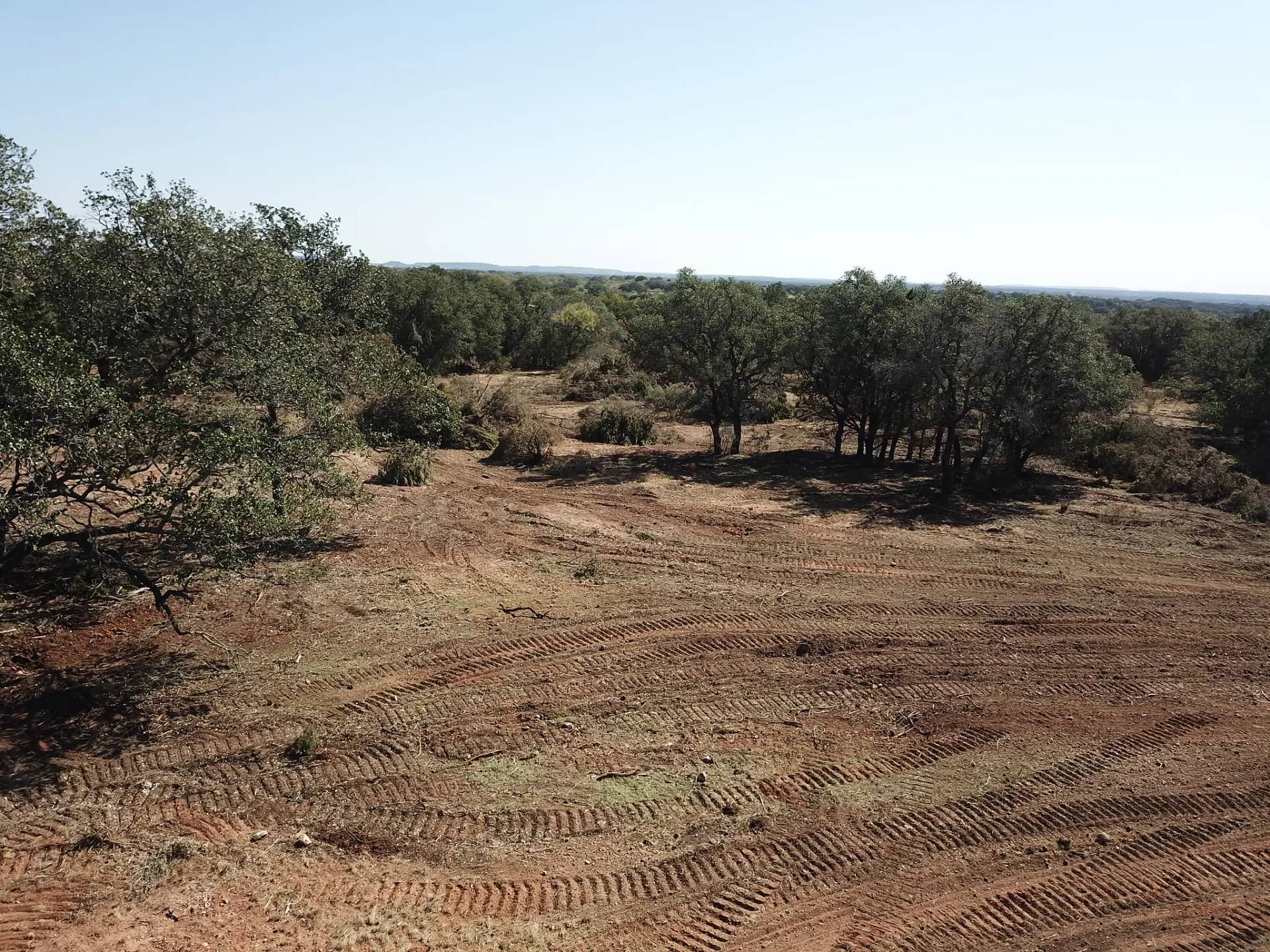
Land clearing: freshly cleared ground marked with track lines, a brush line beyond
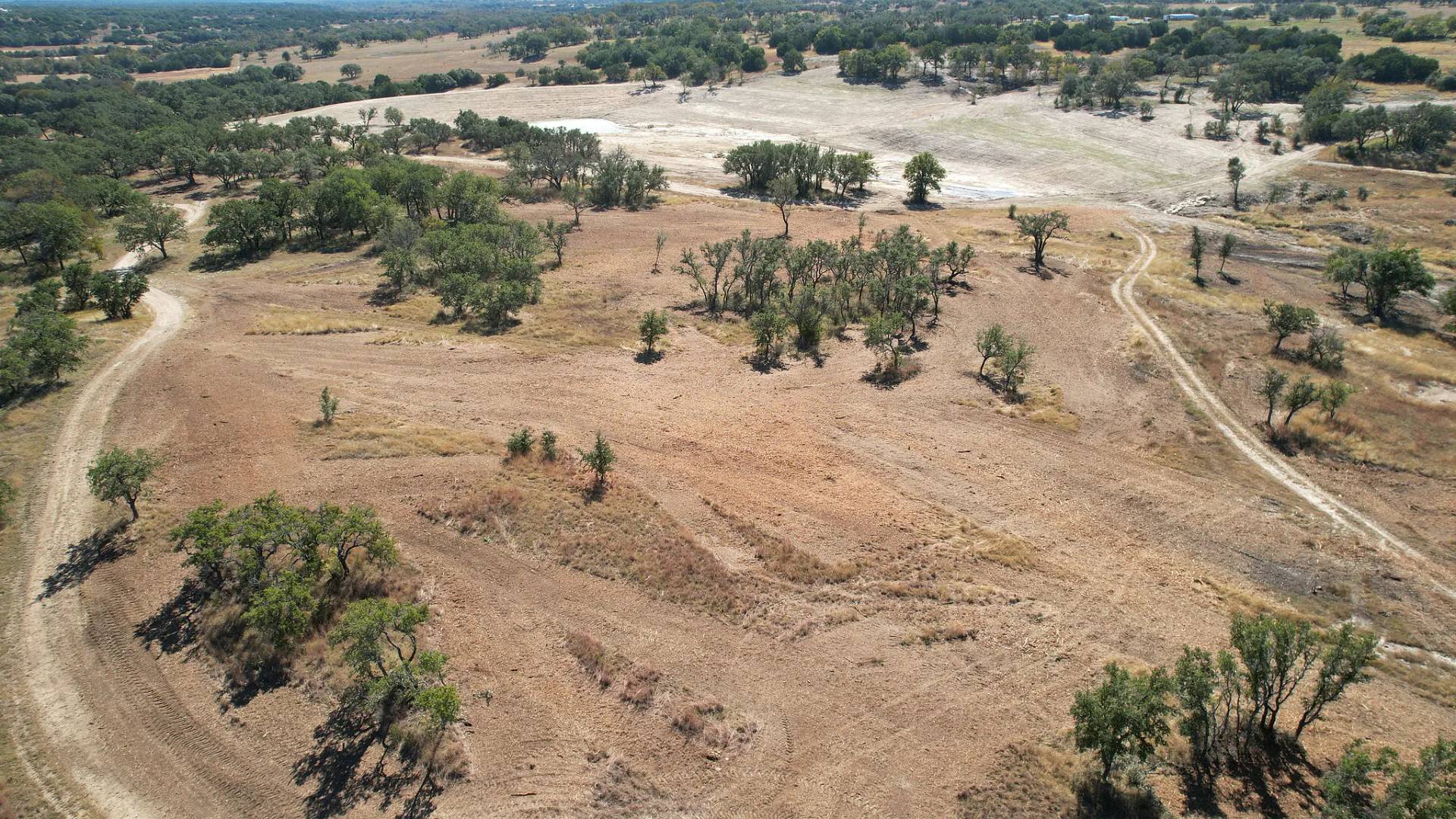
Drone view of a large tract cleared of brush, oak mottes and a ranch road across the ground

Clearing for farm country

This has long been peanut, pecan, hay and dairy country, with De Leon as the county's peanut market town and peach orchards planted here by the 1920s. Crops have shifted over the years, but the ground still works hard, and brush creeps in wherever it gets the chance. The jobs that come with that:

  • Field edges and fence rows. Mesquite and brush cut back off cropland and hay meadows, so equipment can work the whole field and the fence can be seen and fixed.
  • Overgrown pasture. Mesquite and cedar thinned or taken out of grazing ground to give the grass its sunlight and water back.
  • Pecan and orchard ground. Brush and saplings cleared from under pecans and out of old orchard rows, working around the trees that still produce.
  • Leon River and Proctor Lake tracts. Clearing near the river and the lake with a buffer of cover left at the water, so banks hold through high water.
  • Homesites and shop pads. A building spot cleared on a few acres outside Comanche or De Leon, ready for a house or a metal building.
  • Oil lease roads. Brush cut back from lease roads and pad sites around the old fields at Sipe Springs, Sidney and Comyn, where oil has been produced since 1918.

Mesquite on Comanche County fields comes back from its root crown if only the top is cut. Where it's thick, we can grub it out with the CAT D5 dozer instead of mulching, so you're not fighting the same trees again in a couple of years.

Working Comanche County fields

Comanche County borders Hamilton County, just one county past home ground in Bosque County, where Michael Myers founded Double L in 2021, and the operators who come out are the company's own. On moderate brush, the mulcher usually clears 1 to 4 acres a day. Thick mesquite in an old field and wet ground on the dark southern soils both slow that down, and the walk is where we sort out a realistic pace for your acreage.

Clearing often leads straight into other work. We do rock grinding where rock gets in the way of a pad or a road, build ponds and stock tanks, and take work next door in Hamilton County, Mills County and down the road in Brownwood.

If brush is eating into your fields or pasture, request a free on-site estimate or call (254) 267-0626. We take work in Comanche, De Leon, Gustine, Sidney and across the rest of Comanche County.

65 miles from Meridian

About that by road, on Highway 6, US 67 and US 377. The crew and machines come from our base in Meridian.

Highway 6US 67US 377MeridianComanche County

Questions from Comanche County landowners

Can you clear brush along field edges without hurting the cropland?

Yes. We work from the field side, cut mesquite and brush back to the fence or the line you set, and keep the machines off planted ground. Mulched edges leave no piles to burn or haul, and the field can be worked right up to the fence again.

Is sandy Cross Timbers ground harder to clear?

Not harder, just easier to damage. Sandy soil in the north of the county strips and blows if a blade takes the top off. Mulching keeps the topsoil in place and covers it, and where we need the dozer, we keep the disturbance to the spots that need it.

Can you work on land next to Proctor Lake or the Leon River?

Yes, on your side of the line. If your land borders Army Corps of Engineers property around Proctor Lake, we clear only your ground. Near the river and the lake, we leave a strip of cover at the bank so it holds in high water.

How long does it take to clear a Comanche County pasture?

On moderate brush, the mulcher usually clears 1 to 4 acres a day. Thick mesquite, old cedar or wet ground slows that down. After the free site visit, we'll give you a realistic plan for your acreage.

Let’s get your land working for you.

Free on-site estimates for farms, ranches and homesites in Comanche County, TX.

CallFree quote