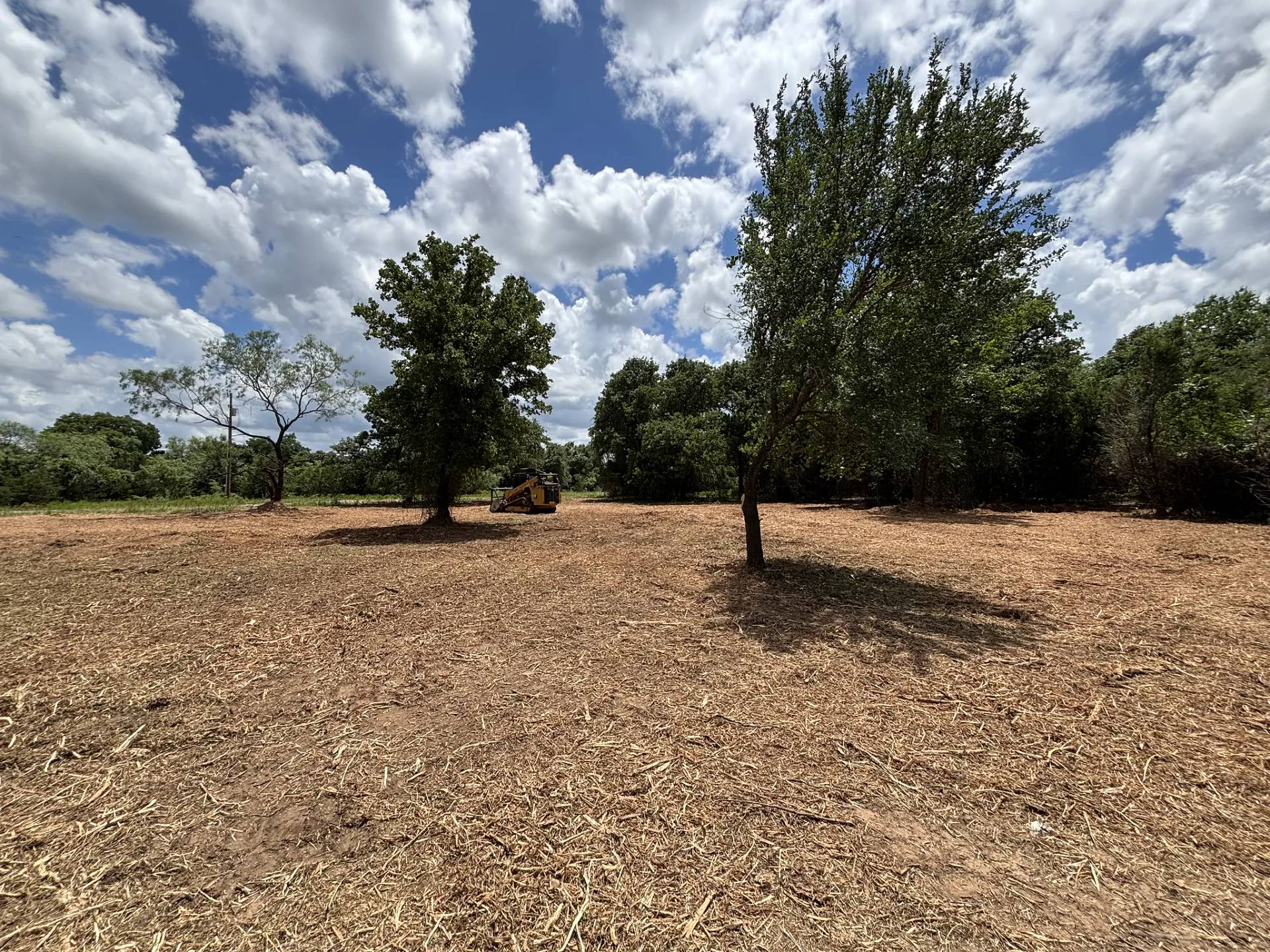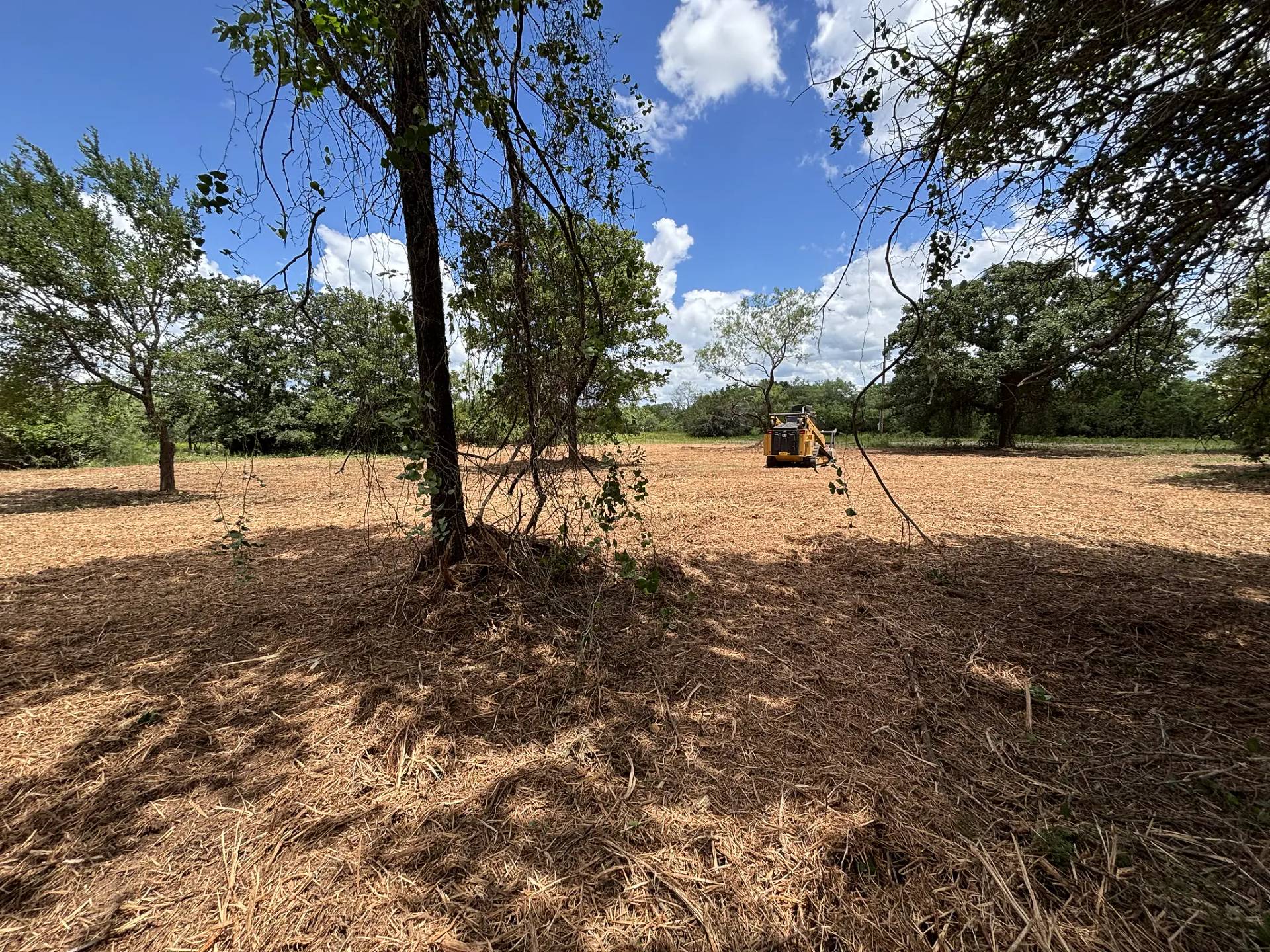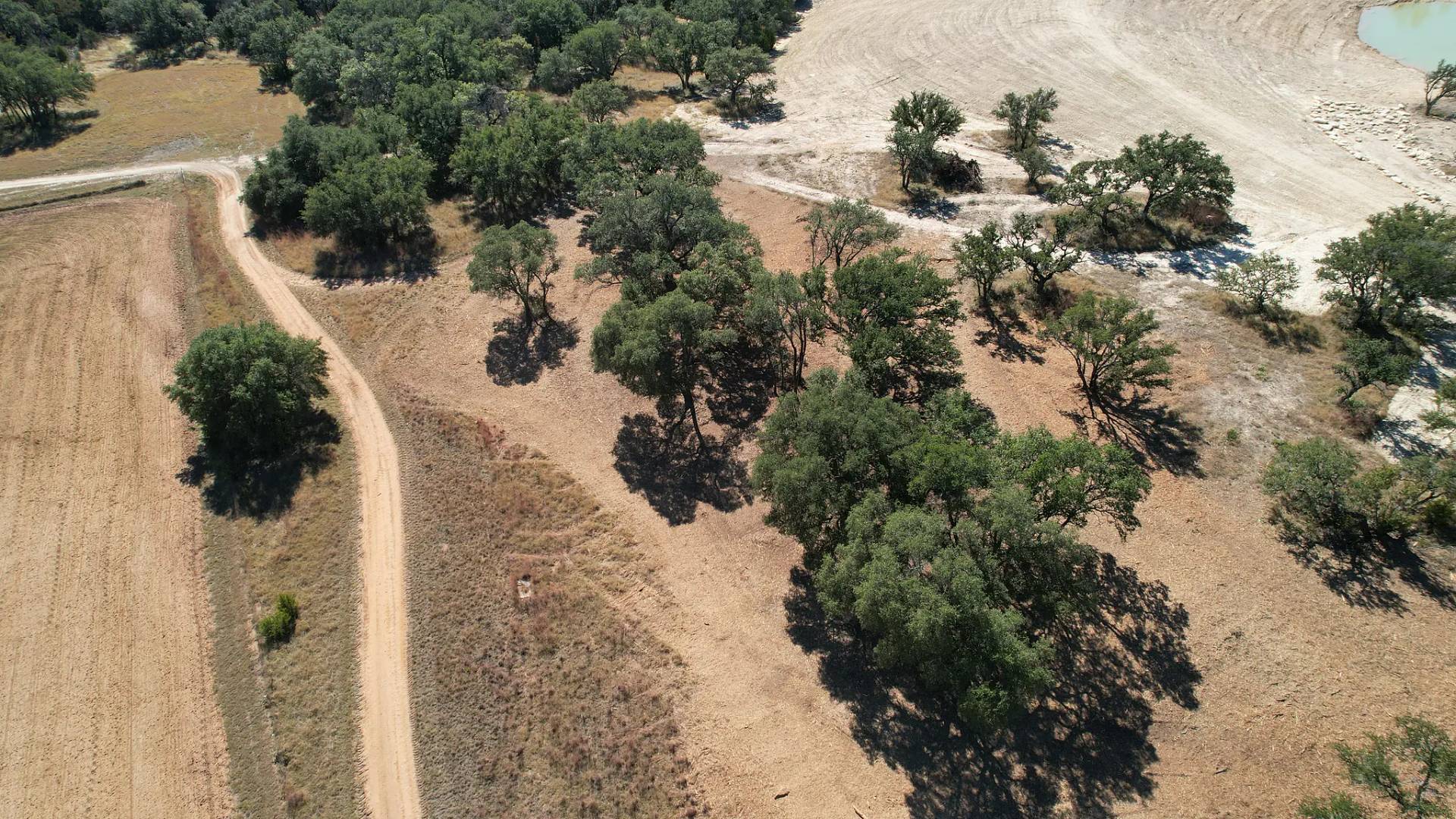
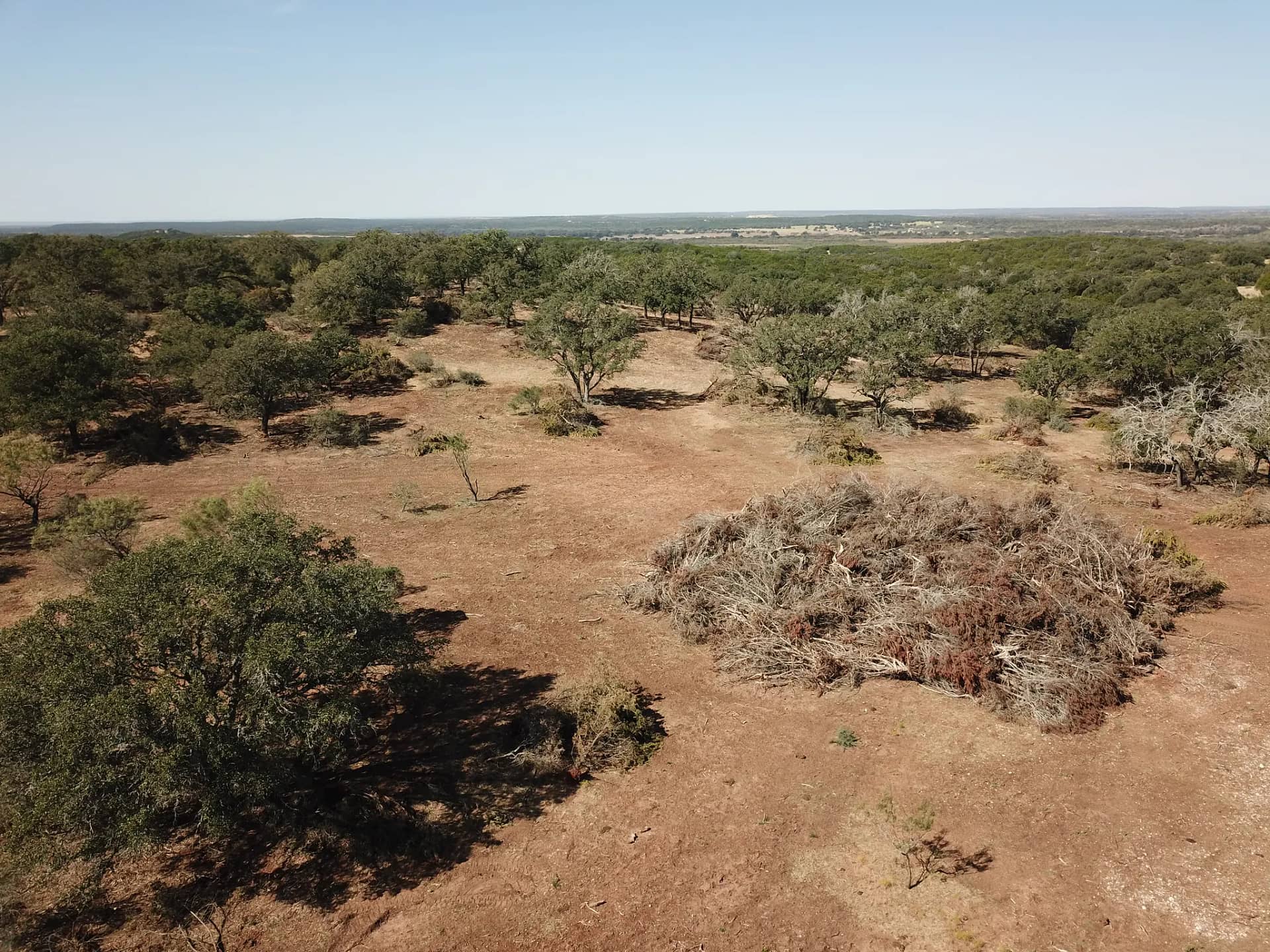
Coryell County is plateaus and grassland split by two drainages: the Leon River through the north and east past Gatesville, and Cowhouse Creek through the west and south toward Fort Cavazos. Between them is cattle and hay ground that cedar and mesquite keep trying to take back. Double L does land clearing across the county. If all you need is cedar mulched, our page on forestry mulching in Gatesville covers that work in detail. This page covers the bigger job, when brush is only part of what has to go.
When the job is more than mulching
Mulching handles cedar and brush well, but a lot of Coryell County land needs more. A pasture full of old mesquite stumps that have to come out before it can be plowed and planted. A fence row of big trees and old wire in the way of a new fence. A house or barn pad that has to be cleared, stripped and graded. A stock tank site. That's where the CAT D5 dozer comes in, working alongside the forestry mulcher. Both are run by our own operators, so you aren't waiting on a second contractor to finish what the first one started.
What Coryell County ground grows
Soils vary a lot here, but most have limestone under them, and the deeper farm ground lies mainly along the Leon and on the flats. The trees are cedar, live oak, Spanish oak, bur oak, shin oak, cedar elm and pecan, with the pecans and elms thickest in the Leon River bottoms that run down past Mother Neff State Park. Up on the plateaus, cedar takes the slopes and breaks. Down on the flats, mesquite moves into the pasture, and on the farm ground fence rows grow into lines of trees.
The two drainages make for different jobs. Along the Leon, the work is mostly farm and hay ground: stumps out, fence rows rebuilt, bottoms opened up under the pecans. Out along Cowhouse Creek and on the western plateaus toward Evant, it's more ranch and deer country, with cedar on the breaks and limestone close to the surface. In the south around Copperas Cove, by Fort Cavazos, it's more homesites and small acreage, where a pad, a drive and a clean yard are the whole job.
The Leon is a river that floods. It runs between two Corps of Engineers lakes, Proctor upstream in Comanche County and Belton downstream, and after a wet spell a release from Proctor plus runoff from the creeks can put the river well over its banks at Gatesville. Bottomland clearing along it waits for dry ground, and the big pecans and elms on the bank stay, because their roots are what hold it together when the water comes up.
Grubbing a mesquite out below the crown with a dozer stops it sprouting back. Cutting it off at the ground, by mower or mulcher, usually doesn't.