
Questions about our property services in Meridian, TX
Good questions, straight answers.
If you own land in Texas and want to change what it can do, you probably have a few questions. Here are straight answers, grouped by the work they're about.
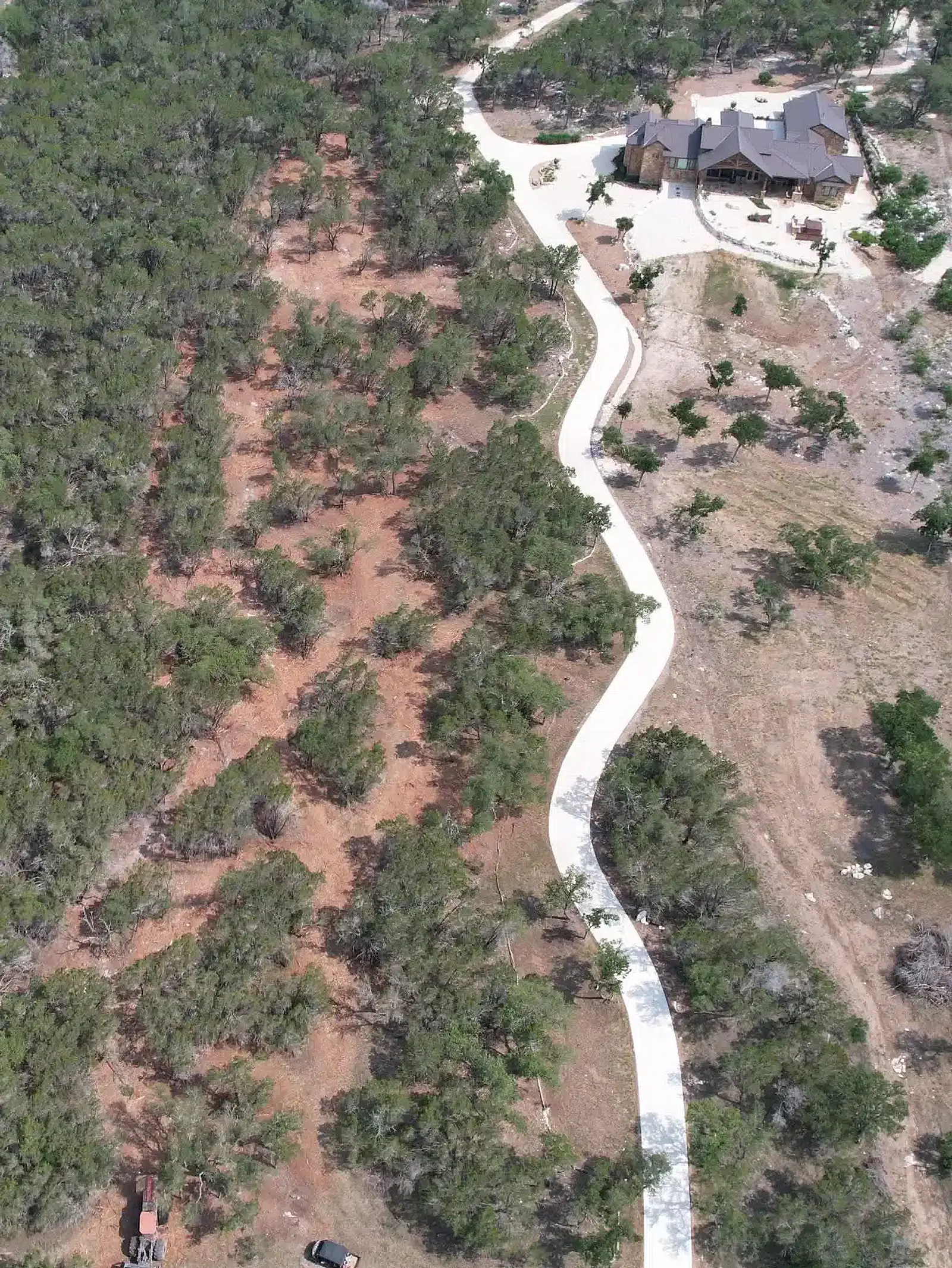
Clearing the ground
Most jobs start here: brush, cedar and rock taken off the land so you can use it.
What is forestry mulching?
Forestry mulching clears brush and trees by cutting and grinding vegetation into mulch. The mulch stays on the ground, preventing erosion, reducing regrowth, and improving soil health. Read more on our forestry mulching page.
Why choose forestry mulching instead of traditional land clearing?
It avoids burning, hauling, and soil disruption. It's cleaner, safer, faster, and leaves your land usable right away, with no debris piles or bare dirt.
What types of projects is forestry mulching good for?
Overgrown pastures, property line clearing, fence line prep, food plots, right-of-way maintenance, trail creation, wildfire prevention, and increasing usable acreage.
How big a tree can your mulchers take down?
Mulching handles dense brush, invasive plants and small trees up to 6 inches in diameter. We run high-horsepower forestry mulchers, including two 400-horsepower Weiler M860A mulching tractors, so thick stands of cedar and scrub get cleared acre after acre. If you have trees you want kept, we mark them before the work starts and the operator works around them.
What happens to the brush and trees once they're cut?
You have a few options. With forestry mulching, the vegetation is ground into fine mulch and left on the ground as cover. We can also pile debris for burning where it's permitted, or haul it off the property. We'll go over which fits your land when we quote the job.
How long does it take to clear a property?
It depends on acreage and conditions. A small homesite or a few acres can often be cleared in a single day. Larger ranch or farm tracts, especially ones with dense cedar or rocky ground, can take several days to a week. You'll get a realistic timeline with your quote so you can plan around it. See our land clearing services for more.
What is rock grinding and how does it work?
Rock grinding uses specialized equipment to break down surface rock and blend it back into the soil. Instead of hauling rock away, we convert it into a usable, compactable layer that supports vegetation, livestock, and future improvements. Our rock grinding page shows what it's used for.
What types of properties benefit most from rock grinding?
Any land with heavy rock, shallow stone layers, rough terrain, or inaccessible areas. Ranch roads, pastures, fields, trails, and building sites all see major improvement.
Is rock grinding better than traditional clearing or excavation?
For rocky terrain, yes. It's more efficient, more cost-effective, and far less disruptive to soil structure. The material stays on site, so there's no hauling in or hauling out.
Will rock grinding impact drainage or damage my land?
No. Rock grinding maintains natural contours and drainage while smoothing the surface. It's an environmentally friendly alternative to deep excavation.
Can you repair rough or washed-out ranch roads?
Absolutely. We turn the existing material into a stable, road-quality surface that holds up over time, improving drivability without importing outside base.
Can you clear brush and grind rock on the same job?
Yes. A lot of Central Texas land comes with limestone outcroppings and rocky draws under the brush. We combine land clearing with rock grinding to turn that rocky space into workable ground, and on many Bosque County properties it's the first step before anything else gets built.
Ponds and fences
Once the ground is open, this is the water and the wire that make it work for stock, wildlife and you.
Do you build new ponds or repair existing ones?
We do both. New pond construction includes site planning, shaping, and water system installation. Repairs address silt buildup, erosion, vegetation overgrowth, and water flow issues. See our pond construction page.
What are the benefits of adding a pond to my property?
A well-built pond increases land value, supports wildlife, improves water management, and offers recreation like fishing or swimming. It also improves the look of the whole property.
What goes into building a new pond?
We start by planning the location, size and depth to hold water and filter it naturally. The design takes your soil type, drainage patterns and surrounding vegetation into account. Then comes the earthmoving and shaping, plus liners, spillways and inflow and outflow systems where the site needs them. If the pond site is grown over, we clear it first.
Will you help me look after the pond once it's built?
Yes. We handle vegetation management around the pond for its long-term health, and we'll give you ongoing advice on maintenance and pond care after the job is done.
What types of fencing do you install?
We install livestock fencing, high game fencing, predator-wire systems, perimeter fences, and water gaps. We also handle right-of-way clearing for a clean, straight fence line. See our fencing page for details.
Is predator wire worth adding to a game fence?
Yes. Predator wire significantly improves protection for wildlife by preventing coyotes and other ground predators from entering underneath the fence.
What is a water gap?
A water gap lets water flow through your fence line while keeping the fence intact. We build them flexible and durable, so water gets through and the fence holds.
Do you clear the fence line before you build the fence?
Yes. We clear the right-of-way first so the fence goes up on a clean, straight, well-prepared line, then build the fence on it. That's one crew for the whole job: cleared line, then fenced.
Buildings, gates and decks
The last stage on a property: covered space, a proper entrance and somewhere to sit and enjoy the land.
Do you build metal buildings or barns?
Yes. We design and construct custom metal buildings including equipment storage, workshops, barns, multi-use structures, and more, built around your layout and how you use them. See our metal buildings page.
What customization options are available for metal buildings?
Roll-up doors, personnel doors, concrete slabs, insulation, windows, lean-tos, interior framing, overhangs, and various roof and wall options.
Do you pour the concrete slab yourselves?
Yes. We grade, compact and form the pad before any steel is ordered, and we do the concrete work directly. That way the slab thickness, rebar layout and anchor bolt placement are all matched to the building from day one.
How long does a metal building project take?
From the first site walk to a finished, usable building, most residential and agricultural projects take four to eight weeks. Permit requirements, concrete cure time and the complexity of the design all affect that. Larger buildings with several bay doors, interior framing or a lot of site prep take longer, and we give you a realistic timeline when we quote.
What size metal building do I need?
It depends on what you're putting in it. A tractor and a few implements typically fit in a 40x60 with 14- or 16-foot eaves. Cattle operations with working pens, hay storage and a small treatment area often need 60x80 or larger. A workshop with a vehicle bay and bench space usually runs 30x50 to 40x60. We work out the size with you on site.
Do you build custom ranch gates and entrances?
Yes. We design and build custom ranch and farm gates, from simple wood structures to fully welded ornamental entries, built to last and to look right at the front of your place. See our custom gates, decks and gazebos page.
What materials do you build gates from?
Wood, metal, or a mix, depending on the look you want. Ornamental entries are welded and fabricated to order, and working gates are built for daily use, livestock handling and easy access.
Do you build decks, gazebos, or outdoor structures?
We do. Whether you want a shaded retreat, an entertainment deck, or a structure that complements your home or ranch, we handle design through final build.
Working with Double L
How a job gets started, who you're working with and what to expect before the first machine shows up.
Do you offer consultations or site evaluations?
Yes. We'll walk the property with you, discuss goals, identify challenges, and recommend the most effective approach for your land.
How do I request a quote?
Call or text (254) 267-0626, or send your project details and property location through the estimate form. We'll walk the property with you and give you a clear quote, and the on-site assessment is free.
Who is Double L Land Management?
We're a family-owned land management company based in Meridian, TX, the Bosque County seat. Michael Myers founded Double L in 2021 to give landowners an honest, dependable contractor who treats their land like it's his own. Read our story.
Are you insured?
Yes. We're fully insured, with general liability and commercial equipment coverage on our projects.
Are your services environmentally friendly?
Very. Our rock grinding and mulching processes minimize soil disruption, reduce erosion, preserve drainage patterns, and support long-term land health.
Do I need a permit to clear land?
It depends on your county and the project. Clearing near creek beds, waterways or other sensitive areas may need authorization from the Texas Commission on Environmental Quality (TCEQ) or the Army Corps of Engineers. Check with your county and the relevant state agencies before work starts, and ask us during your free consultation; we're glad to share what we've seen in our service area.
Do I need separate contractors for clearing, fencing and building?
No. We clear and prep the ground, build fences and ponds, pour concrete and put up metal buildings, gates and decks. One company can take a property from overgrown to finished, with one point of contact and one schedule. See all our services.
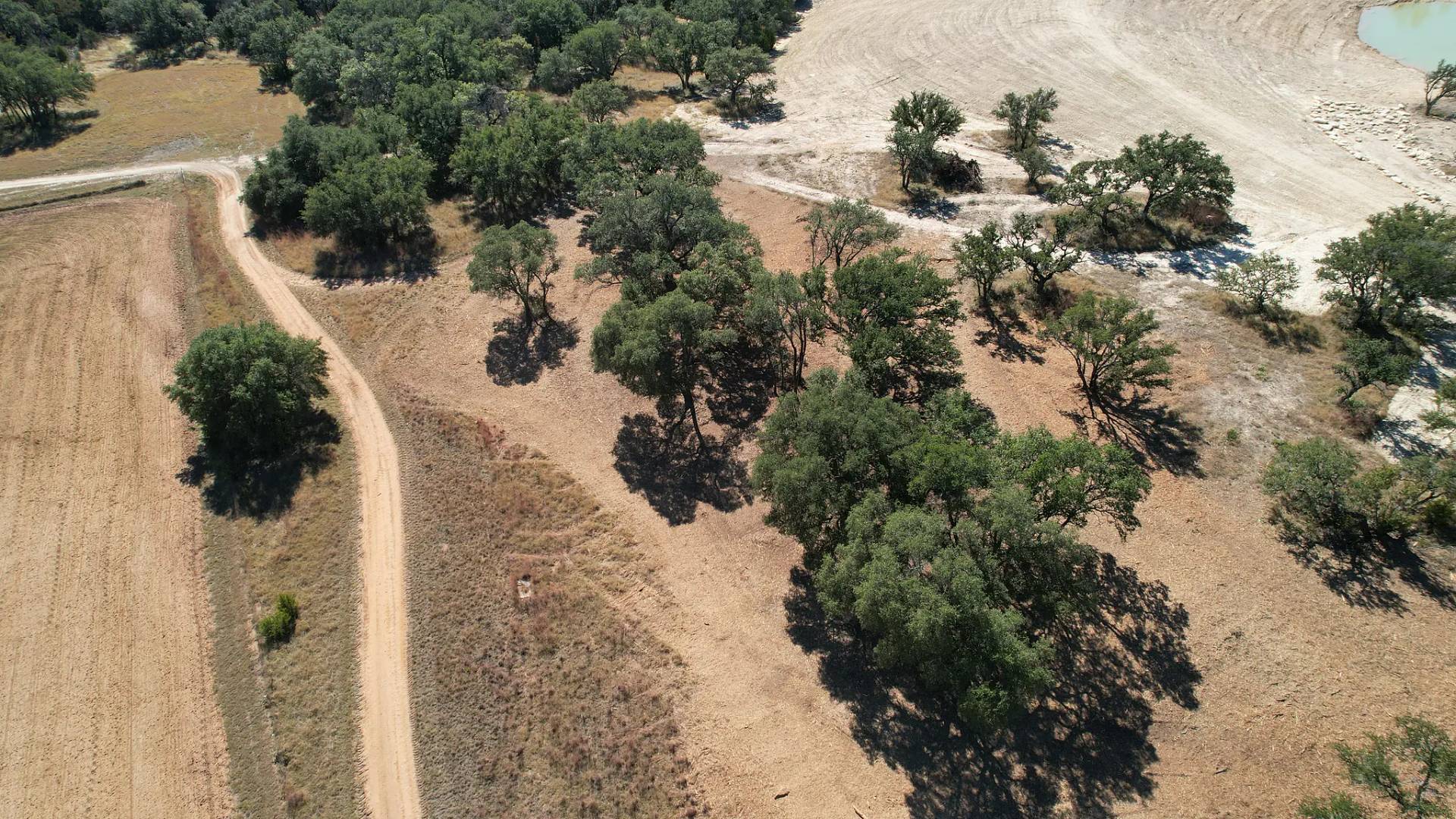
Let’s get your land working for you.
Free on-site estimates for farms, ranches and homesites across Texas.