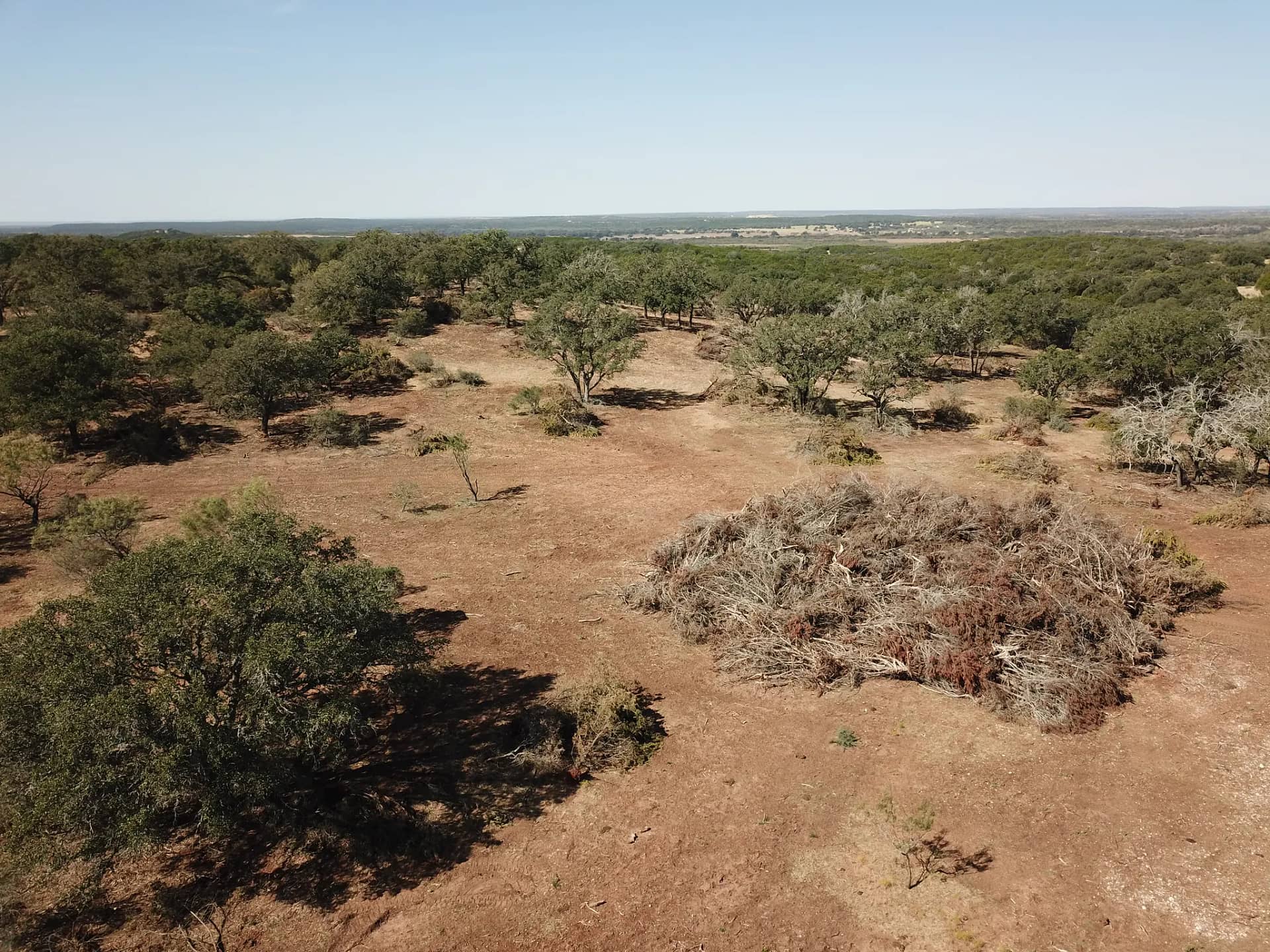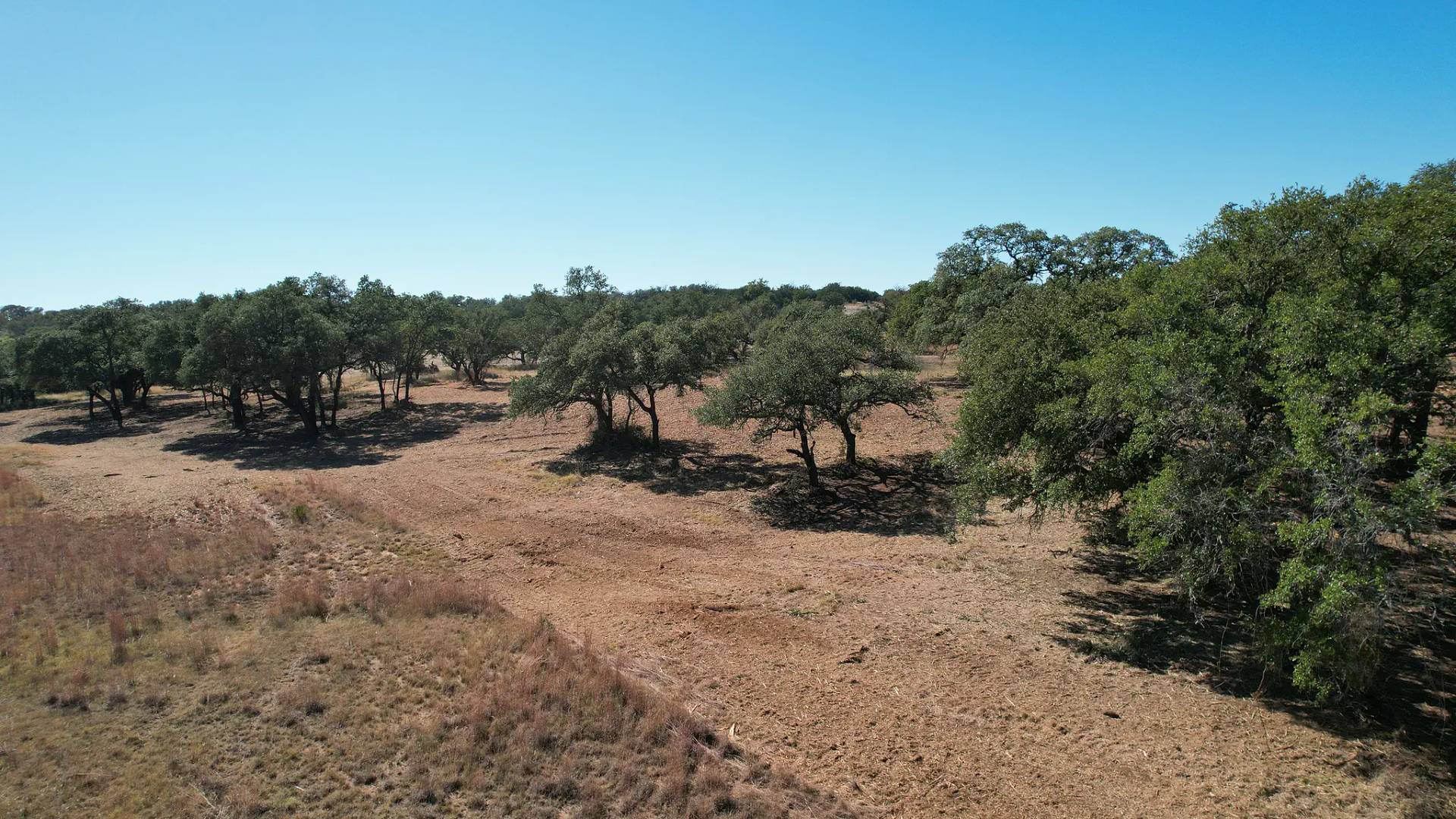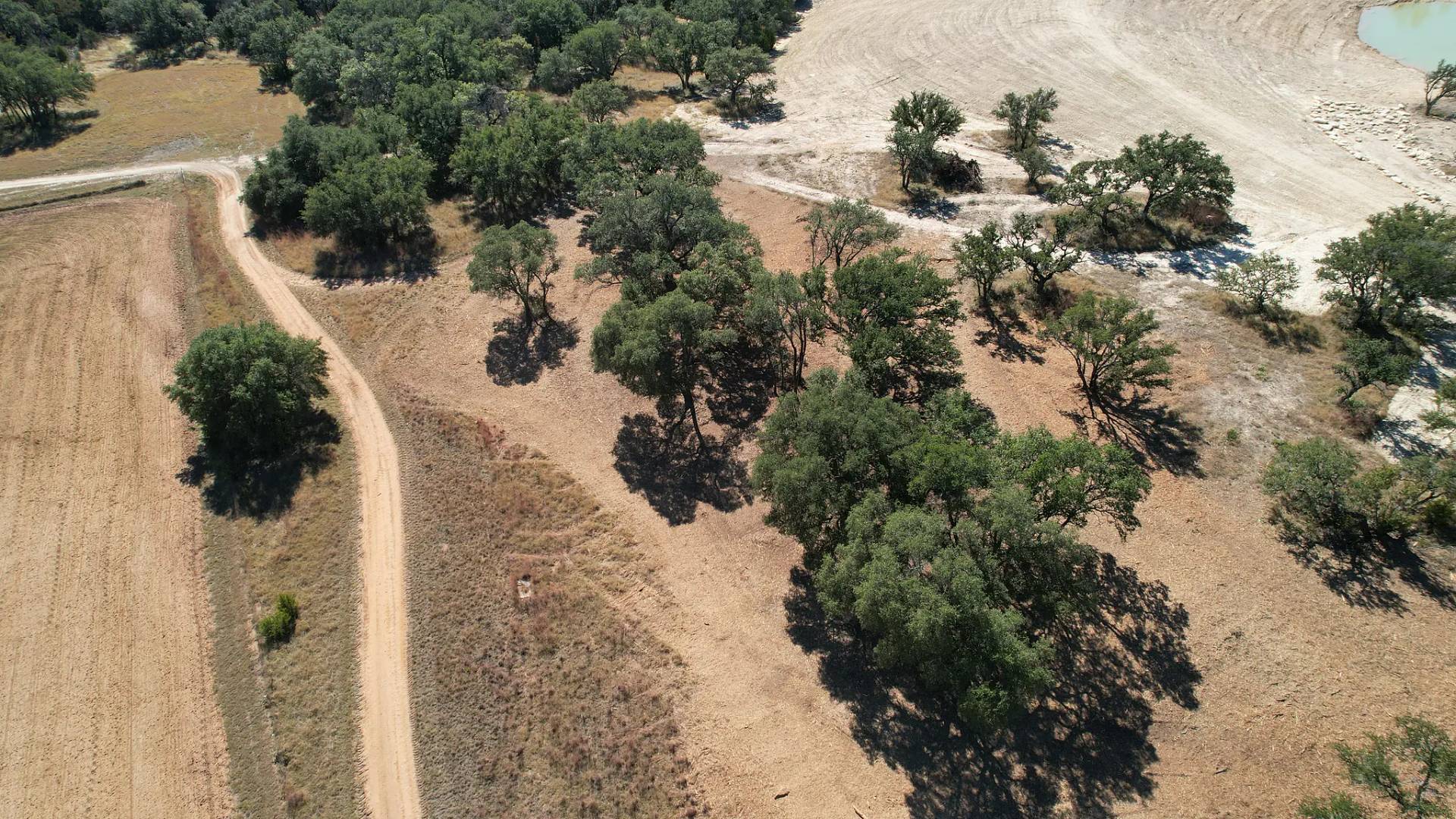
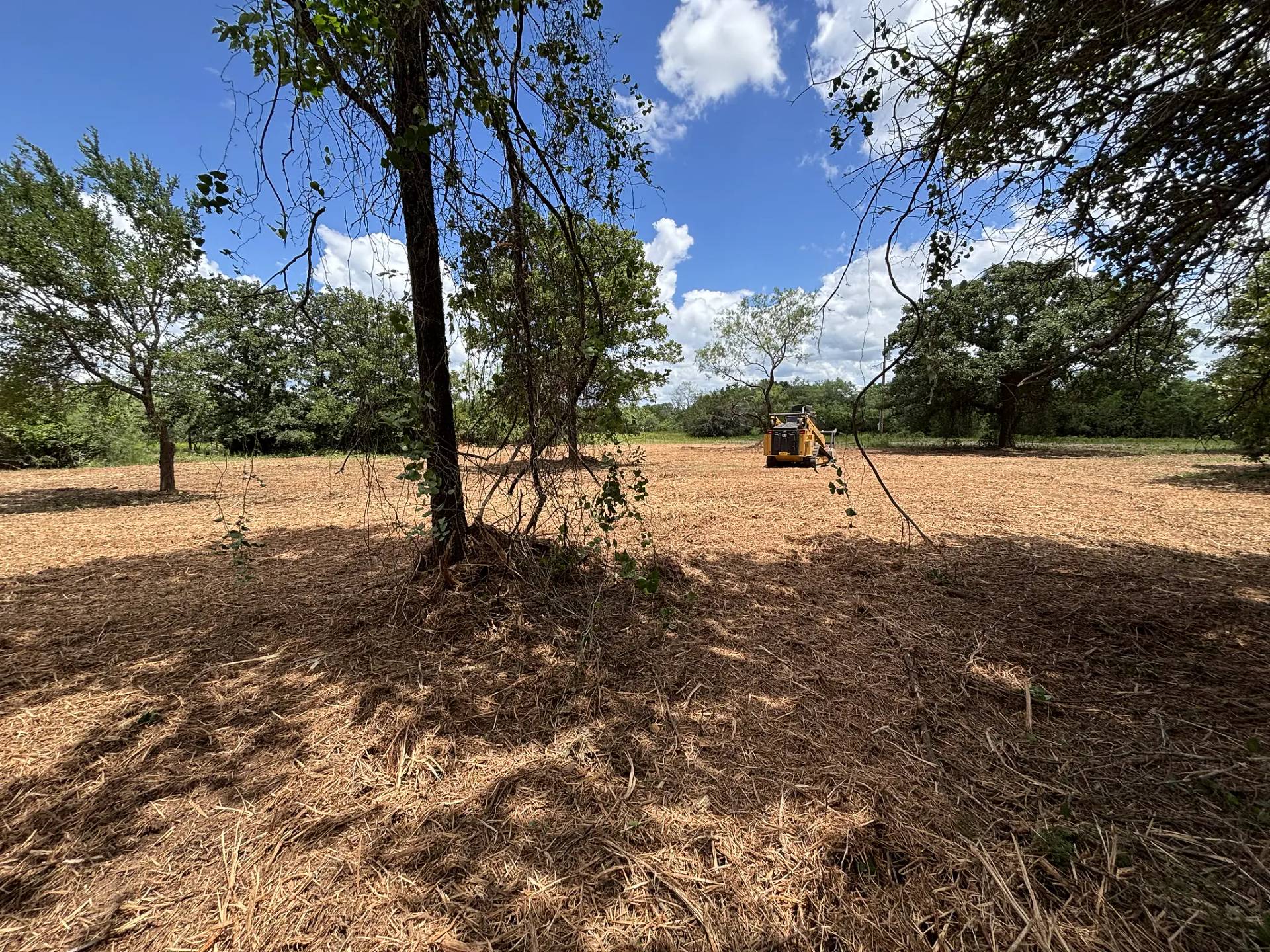
San Saba calls itself the Pecan Capital of the World, and pecans grow thick along both the San Saba and Colorado rivers. Away from the bottoms, the county is oak, mesquite and cedar country with prickly pear scattered through it, grazed by cattle and goats and hunted hard for deer. Double L Land Management provides land clearing and forestry mulching across San Saba County, and much of it is about knowing what to leave standing.
Clearing in pecan country
The county's pecan story starts on the San Saba River, a few miles upstream of town, where E. E. Risien found the Mother Pecan Tree in 1882 and built a nursery business from it. Pecans are still the trees people protect here, whether they're a working orchard or a few big natives along a creek. Brush and saplings come up between them fast, and running a dozer through that ground puts roots and trunks at risk. A mulcher works better: the operator takes the understory, the mesquite and cedar seedlings and the vines, and leaves the pecans and their root zones alone. If you're planting new trees, the ground needs clearing first too, because young pecans need open sun and no brush competing for water.
North of the river, south of the river
The San Saba River divides the county in two. North of it, the land runs steep to rolling. South of it, toward Cherokee and the Llano basin, the ground is mostly flat but cut deep in places by creeks such as Cherokee Creek. Soils are shallow, stony clays in some places and sandy loam in others, and the brush follows them: mesquite and prickly pear on the open flats, cedar on the rocky slopes, live oak in mottes across both. We plan the machine and the route by that, so the Weiler M860A mulcher works the slopes and the CAT D5 dozer does the heavy mesquite pushing where you want open pasture.