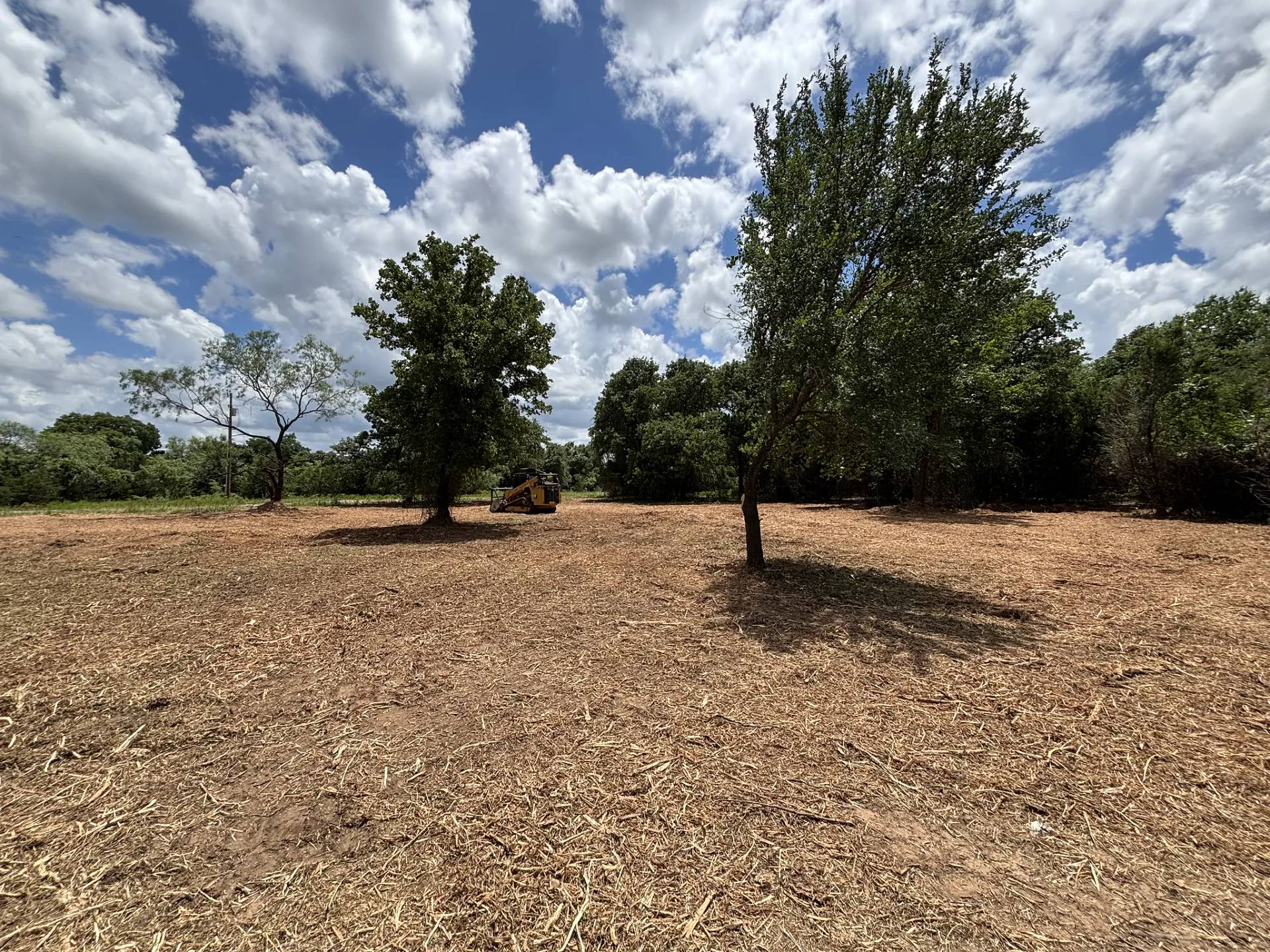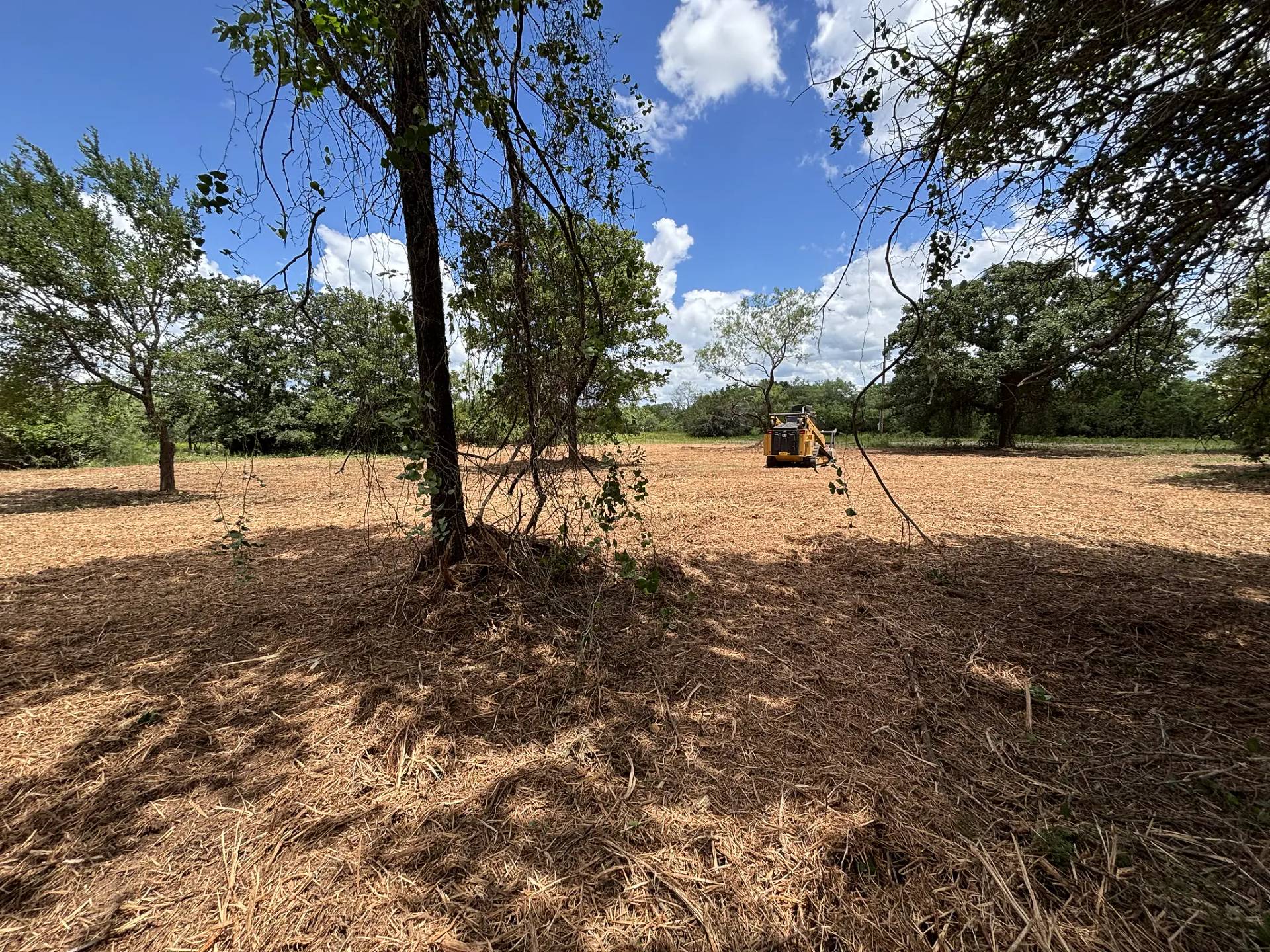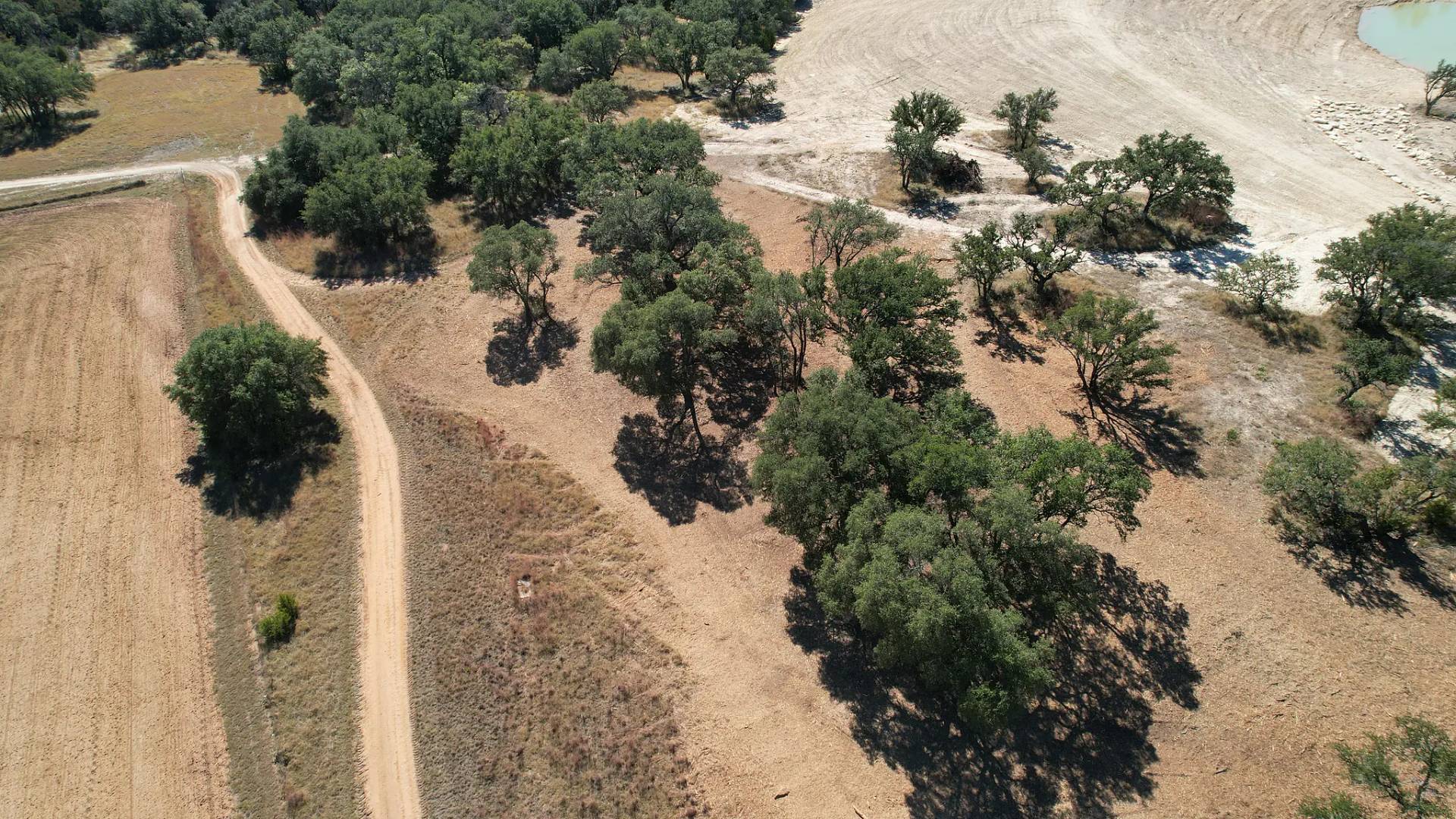
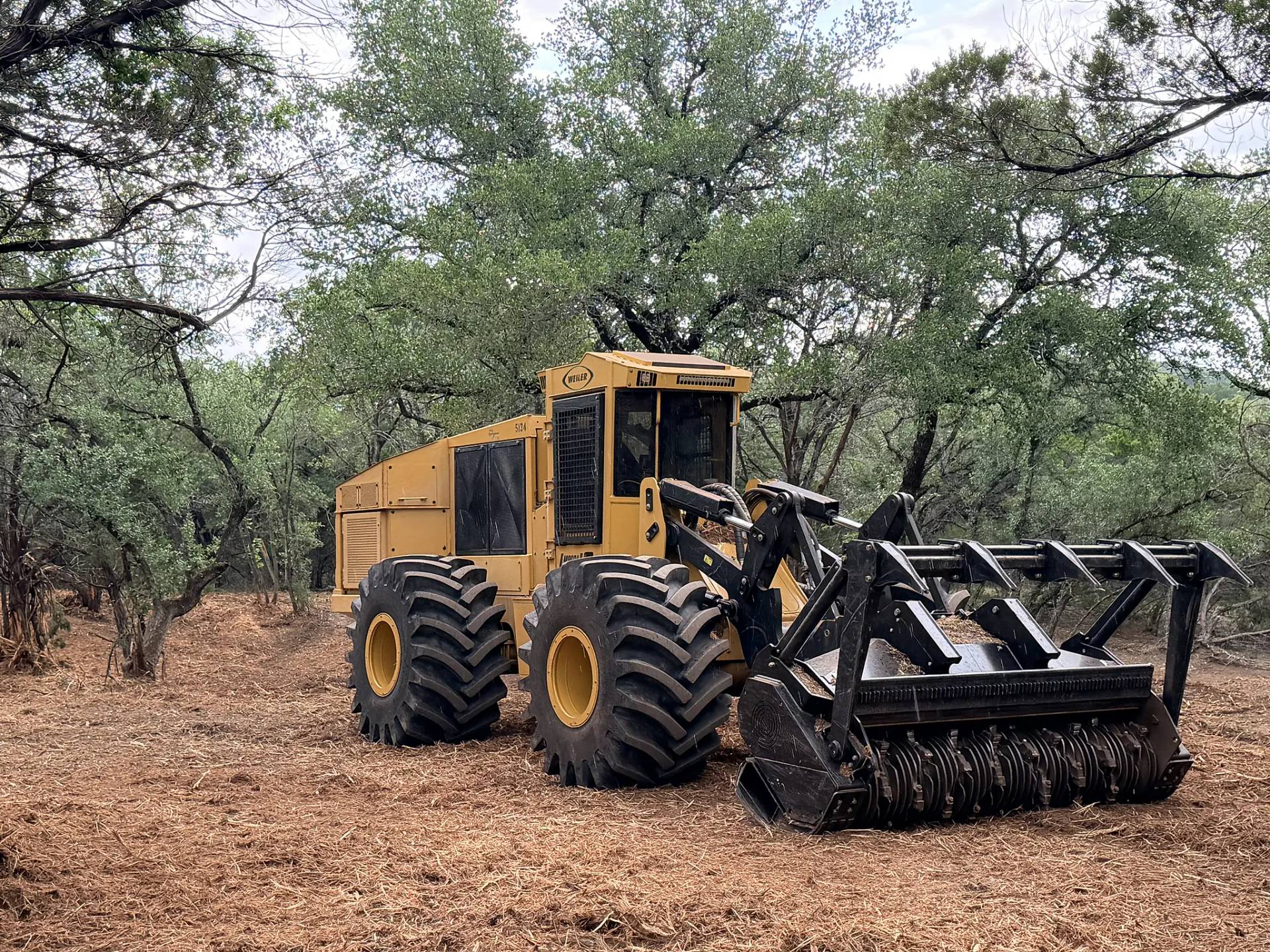
McCulloch County sits at the middle of the state; the geographic center of Texas is about 16 miles northeast of Brady. It's rolling to hilly country, cut east to west by the Brady Mountains and draining north to the Colorado River and south to the San Saba. Double L Land Management does land clearing across the county, from creek-bottom pasture along Brady Creek to sandy uplands toward Voca and Rochelle, using forestry mulching where it fits and the dozer where it doesn't.
Two kinds of ground in one county
McCulloch County land changes fast. The valleys hold deep black loam, while the uplands run to dark and light sand. Cedar and post oak grow in the hills, and live oak, mesquite and pecan crowd the stream banks. On the east side near Voca, the sand sits on the Hickory Sandstone at the northwestern edge of the Llano Uplift, the same formation the county's sand plants have mined for years.
That matters on a clearing job. A machine that runs well on deep valley soil needs a gentler pace on loose sand, where torn-up ground blows and washes. Up in the hills, a stand of post oak is often worth saving while the cedar under it goes. Down on the creeks, mesquite is the main target, and it comes back from the root crown unless the crown comes out.
Common clearing jobs around Brady
Stock raising has been the main work here since settlement, and nearly all the county is still farms and ranches. Crops have ranged from wheat and grain sorghum to peanuts, peaches and pecans. So the work runs from mesquite taken off old fields and cedar cut back from pasture to fence lines opened up and homesites or barn pads cleared on smaller tracts near town. Around Brady Lake, the roughly 2,000-acre reservoir the City of Brady built on Brady Creek just west of town in 1963, lots and tracts near the water can need brush cut back for a house or a path to the shore.