Granbury grew up around its courthouse square on the Brazos. Lake Granbury, finished in 1969, turned Hood County into lake, retirement and commuter country, and much of the land around town is now small acreage: homesites, horse places and weekend tracts between Granbury, Acton, Tolar and Lipan. Double L does land clearing and forestry mulching on that ground, coming up Highway 144 from our base in Meridian.
Cross Timbers ground, not Hill Country rock
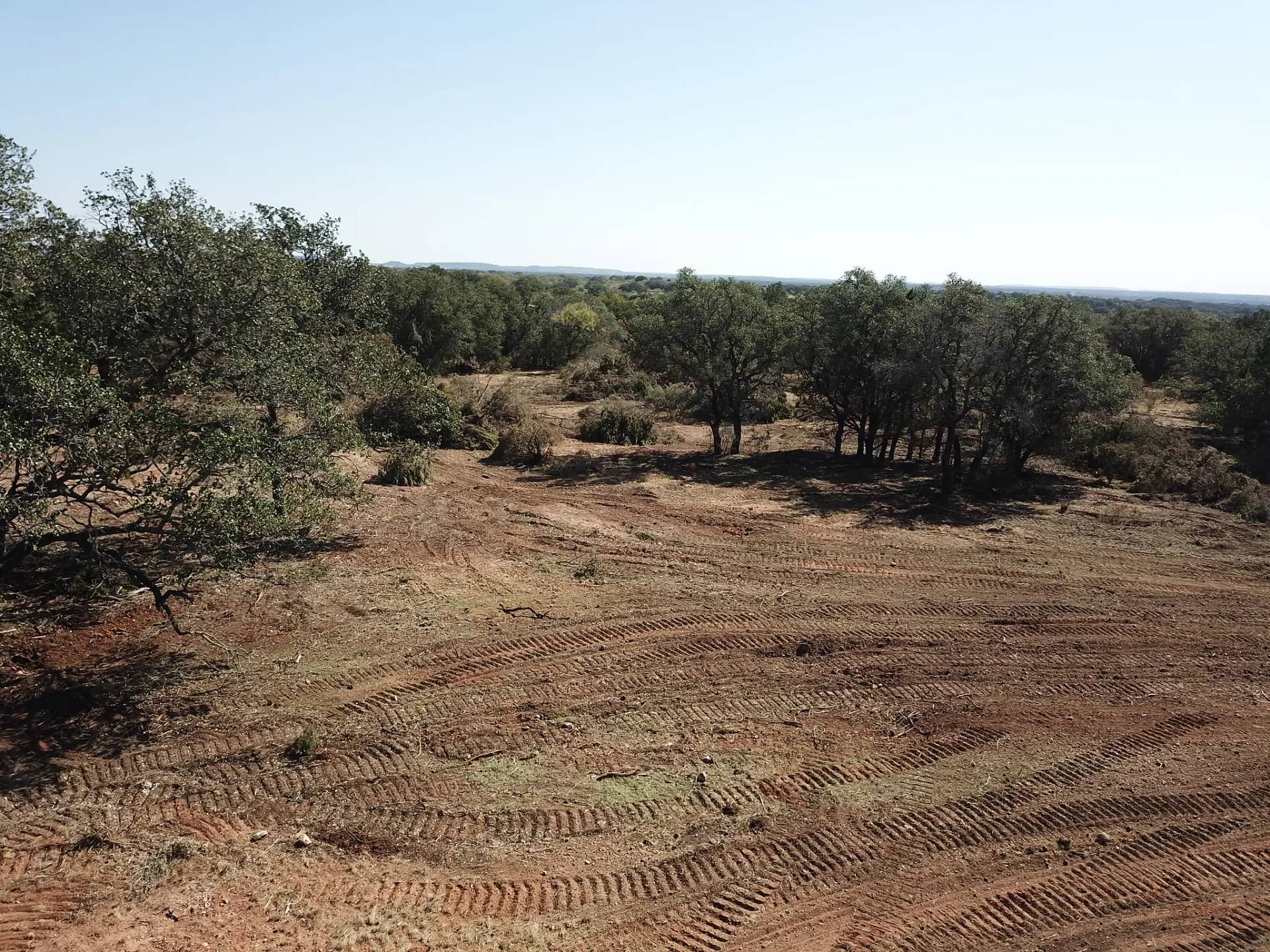
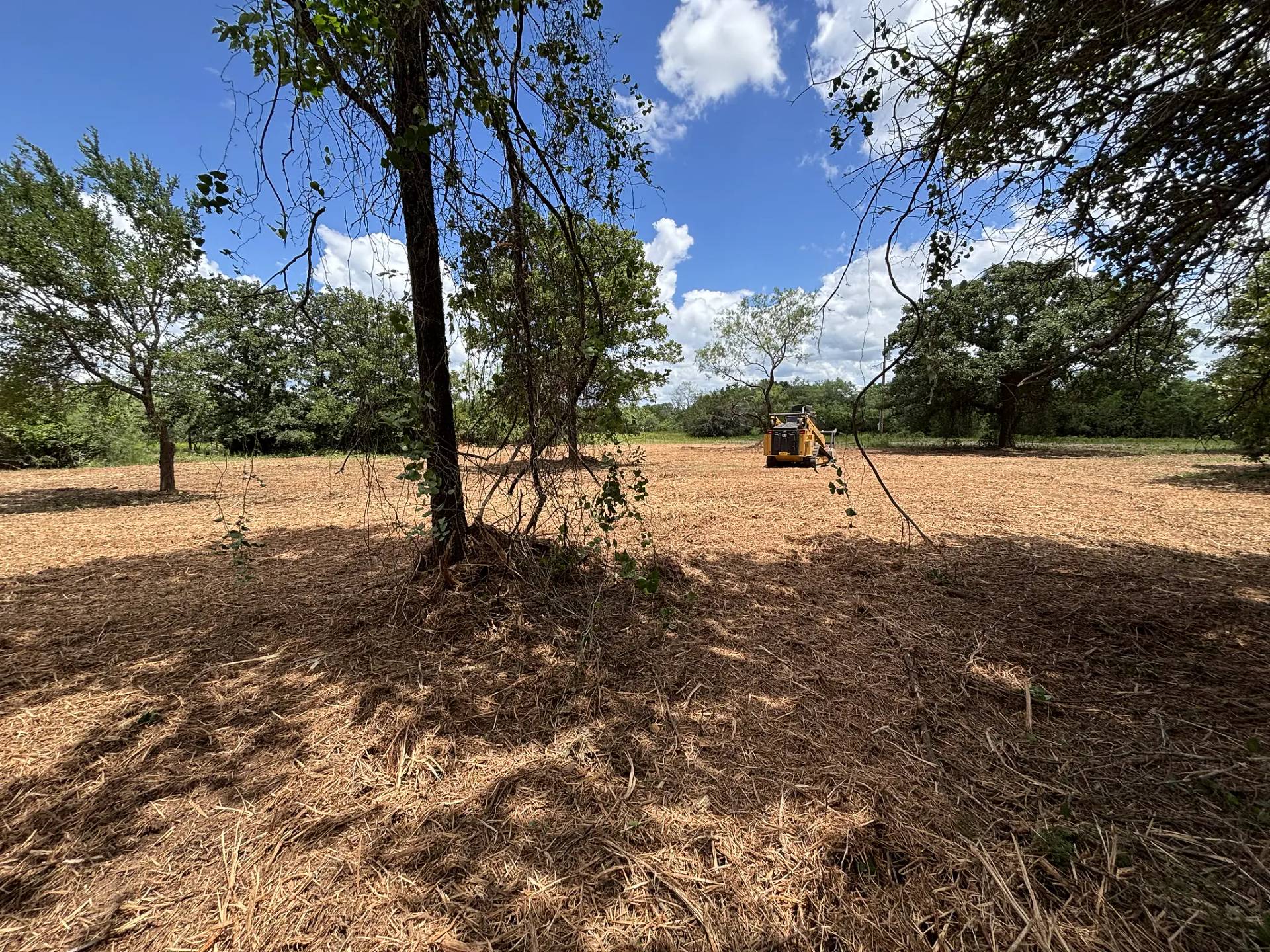
Hood County sits in the Western Cross Timbers. Instead of the shallow limestone to the south, much of the land around Granbury is brown, red or dark loam and sand, wooded with post oak and blackjack oak, with mesquite and cedar filling in the open ground. That changes the job. Sandy loam is easier going for equipment, and the oaks on it are often the reason someone bought the lot, so on wooded ground the usual goal is to clear the underbrush, greenbriar and young cedar and keep the good trees.
Around town, side by side
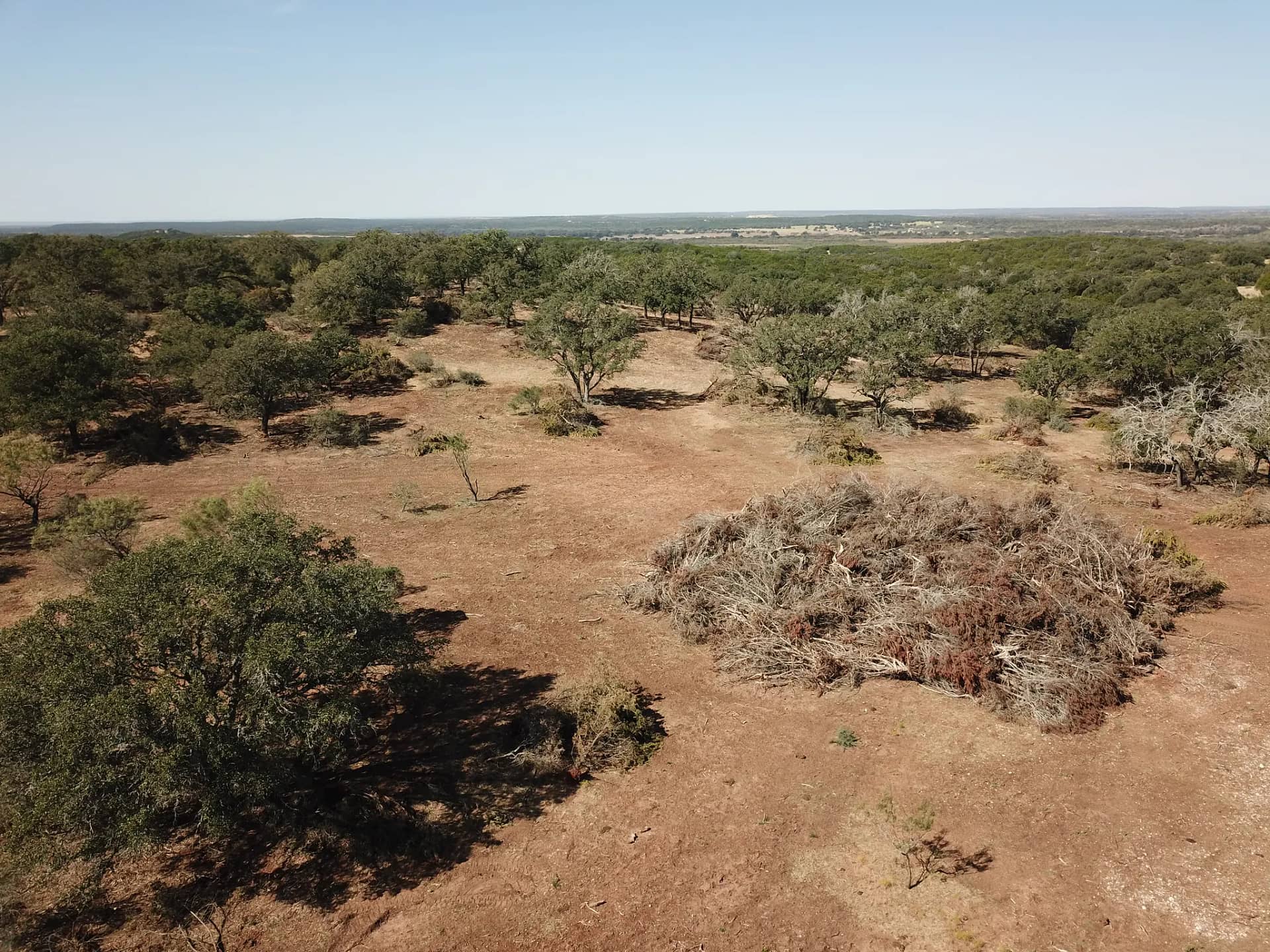
West of Granbury on US 377 toward Tolar, the land opens up into pasture with mesquite and scattered oaks, and clearing there is mostly about getting grazing or mowing ground back. Around the lake and east toward Acton, it's homesites and lake lots under heavy post oak, where the job is selective and the neighbors are close. Along the Brazos and its creeks, the bottoms carry pecans, which have long been a Hood County crop. An old pecan bottom gone to brush is worth clearing carefully, tree by tree, because those trees took decades to get that size.
Granbury is about 41 miles southwest of Fort Worth on US 377. For a homesite on a few acres within reach of the metro, the clearing list is usually short: a pad, a drive, a yard, a fence and a place to park the trailer.
The lake shapes the land around it
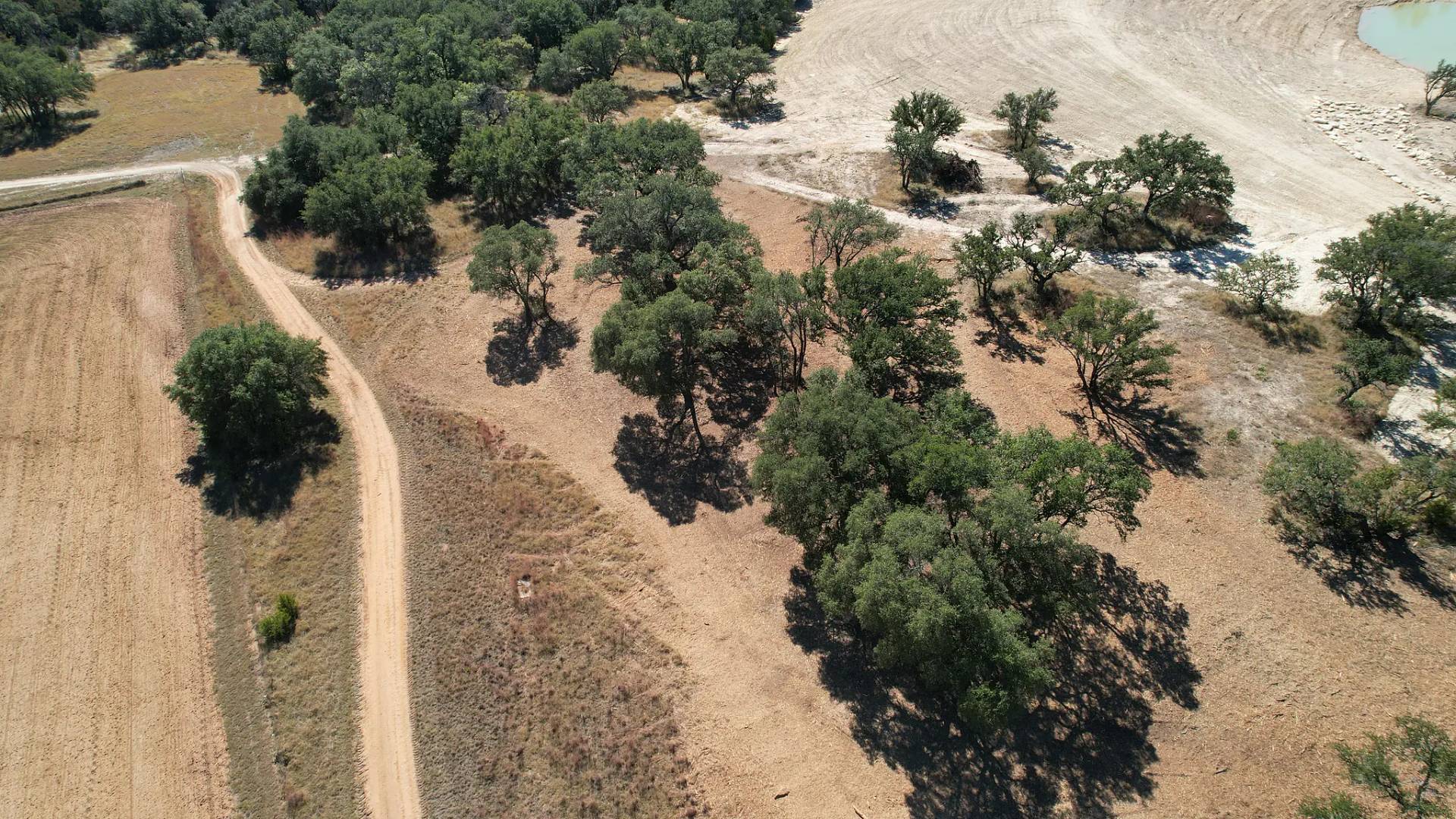
Lake Granbury is the Brazos held back by De Cordova Bend Dam, and it winds about 35 miles up the river valley. All that shoreline means a lot of the acreage around town sits on slopes that drain straight to the water, with coves and creek arms cutting into the land between subdivisions. Cleared ground near the lake is best left covered, which is one more reason we mulch here instead of scraping, and why the edge closest to the water is usually the last place to take every tree.