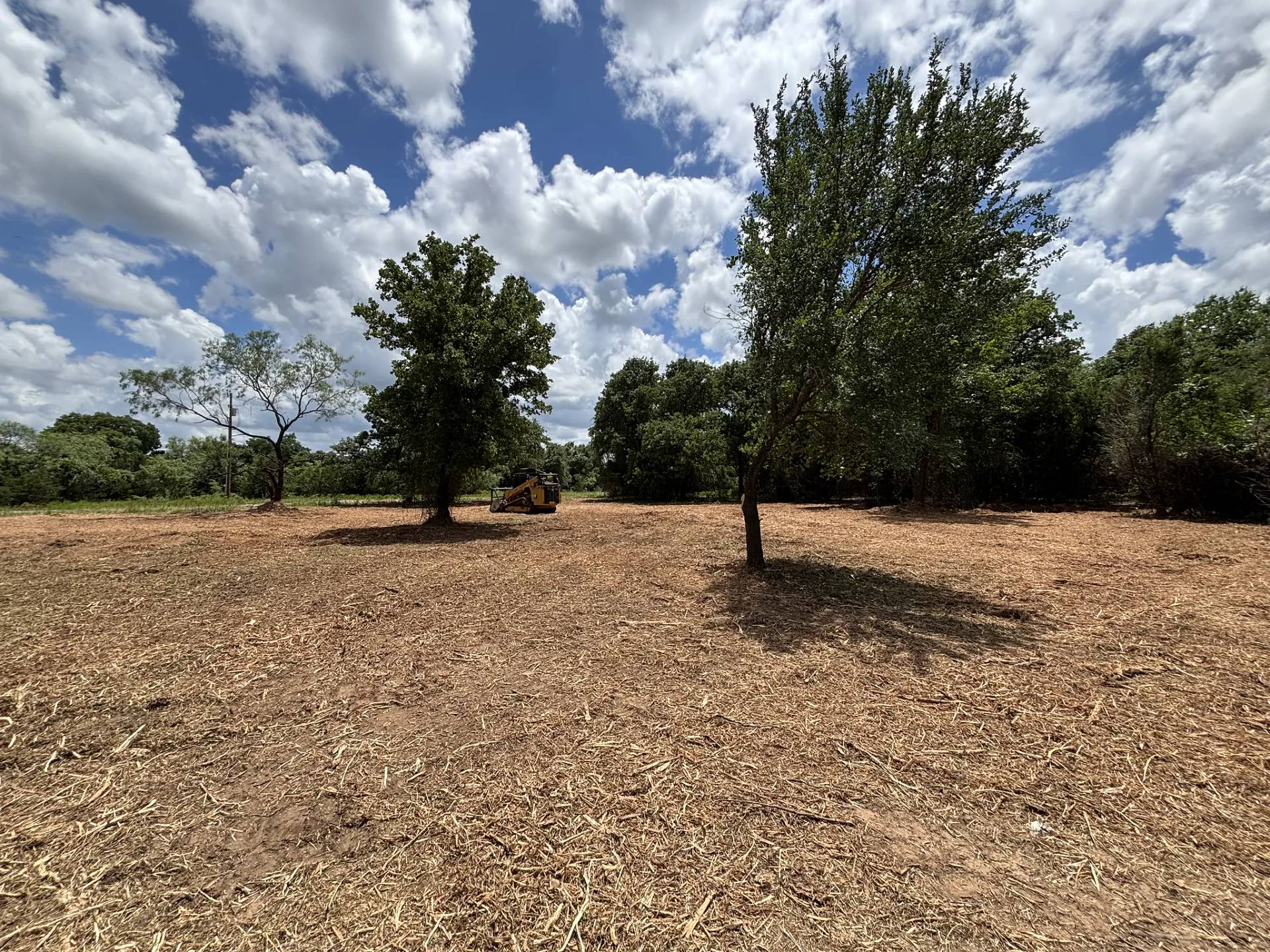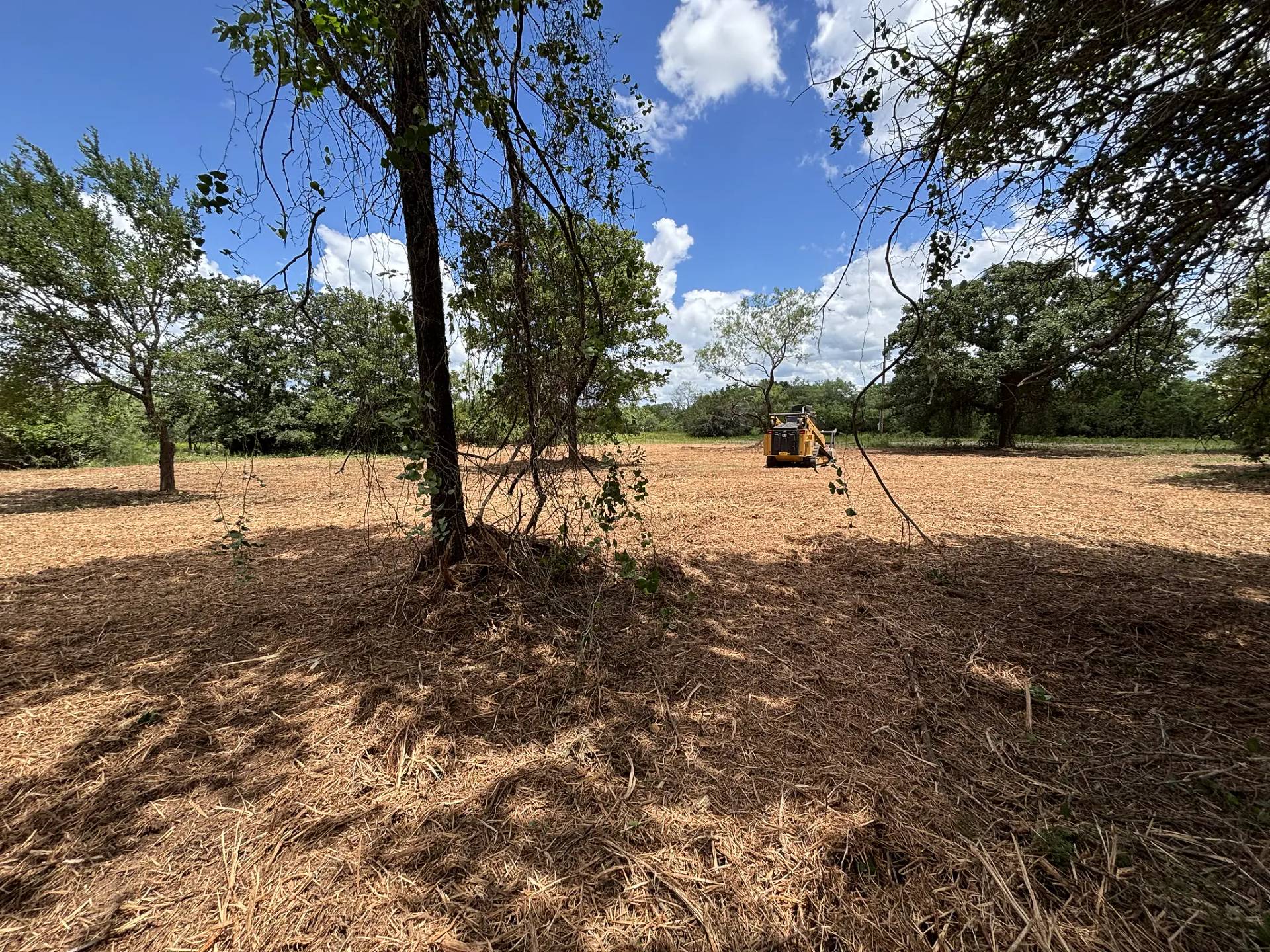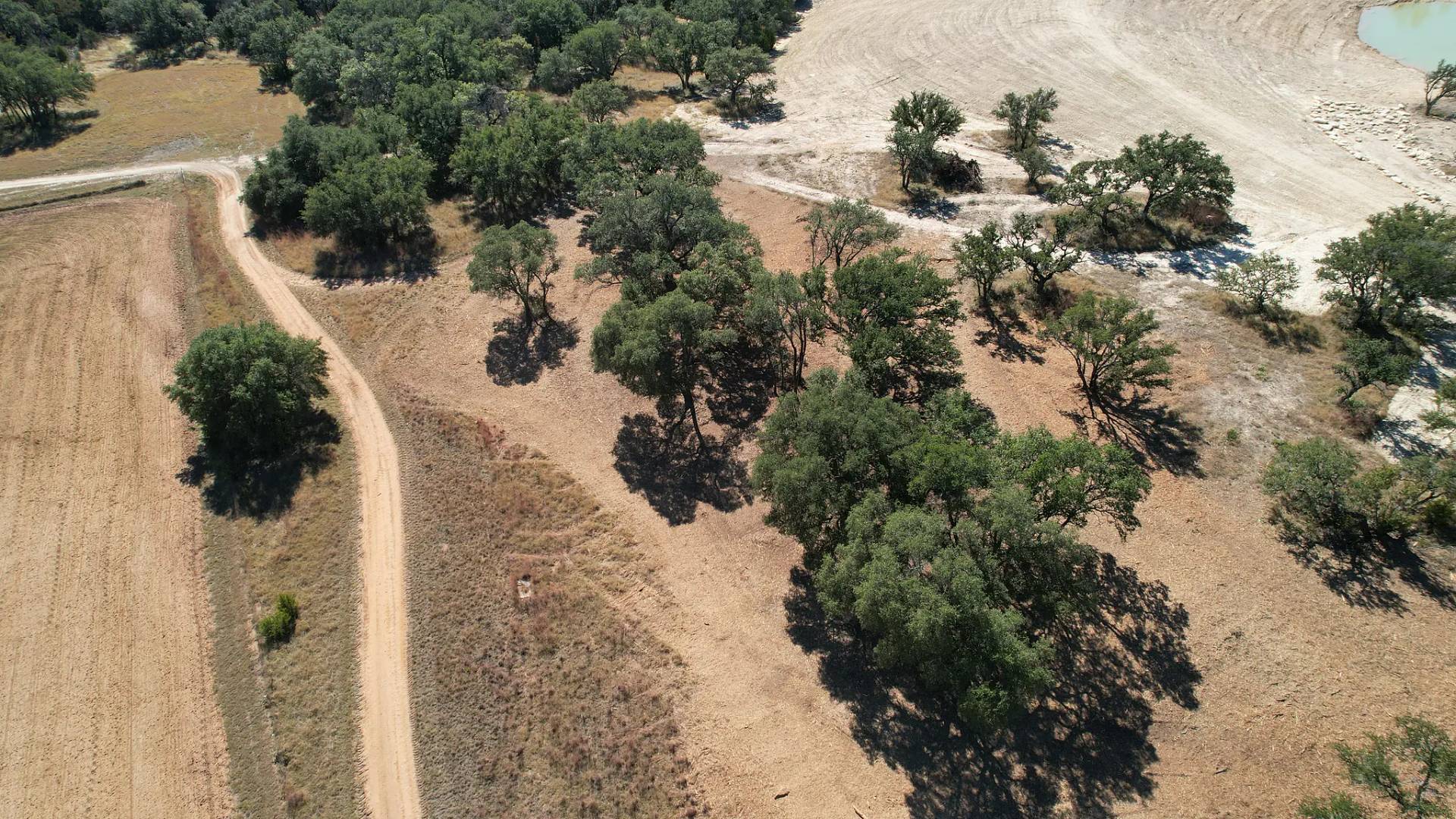
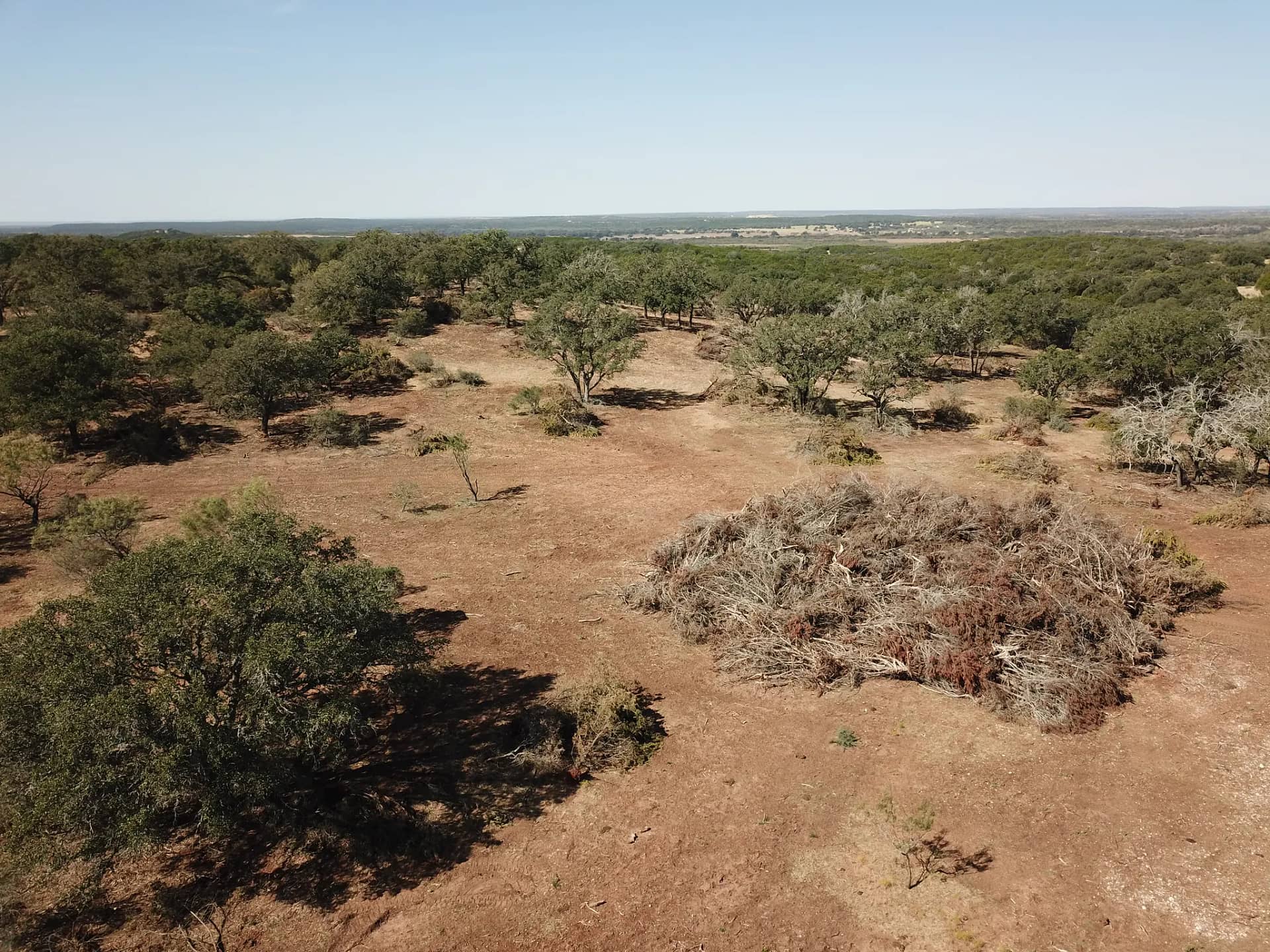
Fort Worth sits where two kinds of country meet. South and east of downtown is the Grand Prairie, with thin soil over limestone. West, into Parker County, the ground turns sandy and the Western Cross Timbers begin, with post oak and blackjack oak. Double L does land clearing and forestry mulching on acreage around the city, and the kind of ground decides how we go about it, from which machine goes in first to what stays standing.
Two ground types, two approaches
Limestone prairie, south and southwest
Around Benbrook, Crowley, Joshua and Godley, the soil is often shallow over limestone, and the brush is mesquite, cedar and hackberry that has filled in old pasture. Cedar comes out cleanly with the mulcher and doesn't resprout from the stump. Where limestone ledges break the surface on a drive or building site, rock grinding turns them into a workable base instead of a reason to move the house. North of town, out US 287 toward Haslet and Rhome, the land opens into flatter prairie where mesquite and brush fill old pasture and fence lines.
Cross Timbers, west and northwest
Out I-20 and I-30 toward Aledo, Willow Park and Weatherford, and up SH 199 toward Azle and Springtown, the land is sandy loam under post oak and blackjack oak, tangled with greenbriar, with cedar coming up underneath. These tracts usually call for selective clearing: keep the best oaks, mulch out the understory and the cedar, and open the ground so you can see it and use it. Sandy soil washes easily once it's bare, so the mulch layer is worth leaving in place. Post oak is slow-growing and doesn't take kindly to its roots being torn up, so the operator keeps the heavy work off the root zone of the trees you're keeping.
Lakes, creeks and the Trinity forks
The Clear Fork and West Fork of the Trinity both run through Fort Worth, and Benbrook Lake, Lake Worth and Eagle Mountain Lake sit on its edges. Acreage near the water tends to be the brushiest: creek bottoms full of hackberry, elm and greenbriar, and slopes where cedar has taken over. Near water, mulching keeps the ground covered and the soil out of the creek. If you'd like water of your own, our pond construction crew can build a pond once the site is clear.
Inside Fort Worth city limits, the Urban Forestry rules in Section 6.302 of the zoning ordinance apply when new construction needs a building or grading permit: the city works toward a 30 percent tree canopy and expects a share of existing canopy to be preserved, and large trees count as significant. If the clearing is the first step of a build inside the city, ask Development Services about a tree plan before the work is booked.