Call or text anytimeMeridian, TX · Bosque CountyFacebookYouTubeInstagram
Double L Land Management LLC (254) 267-0626Free quote
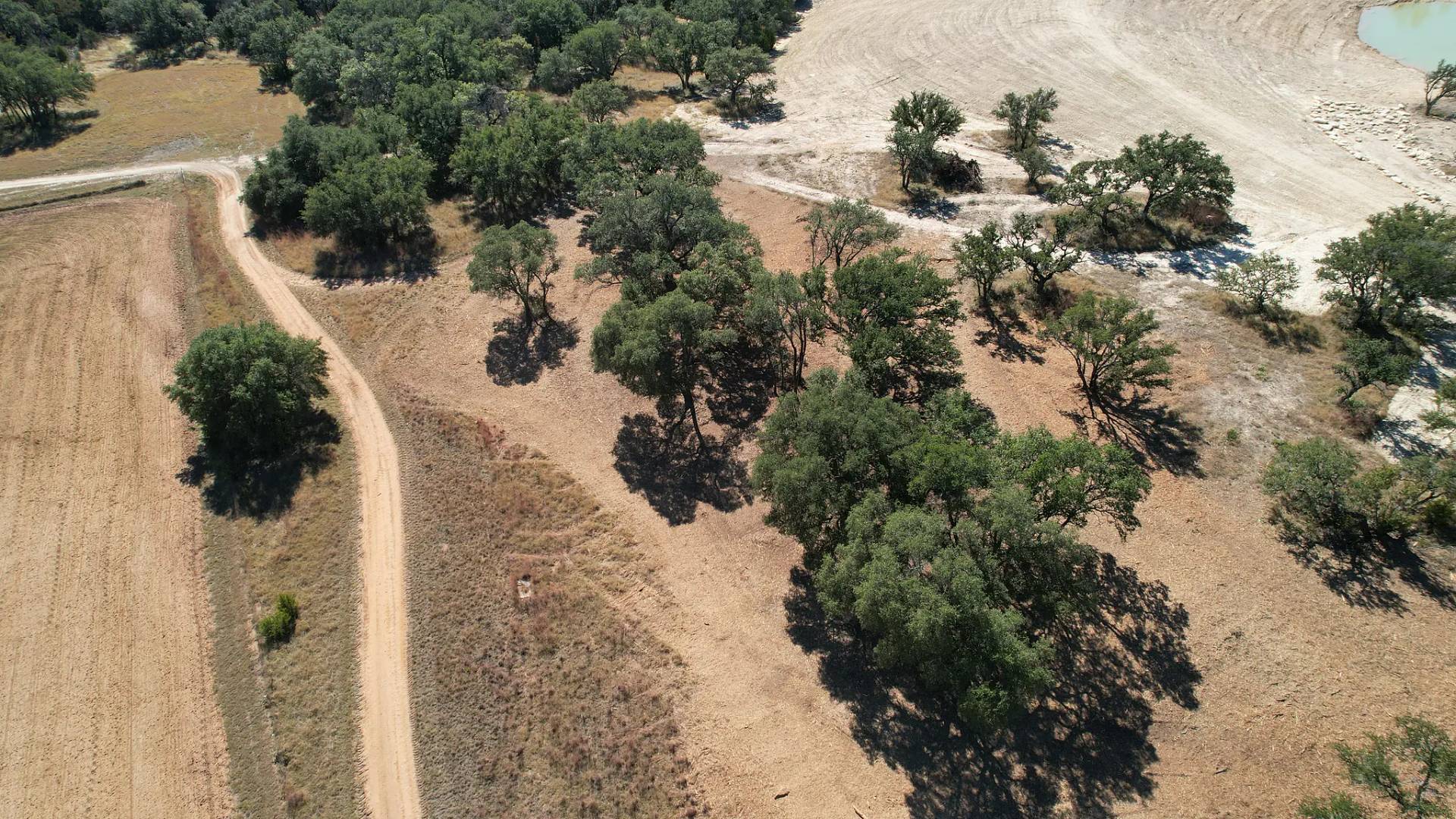
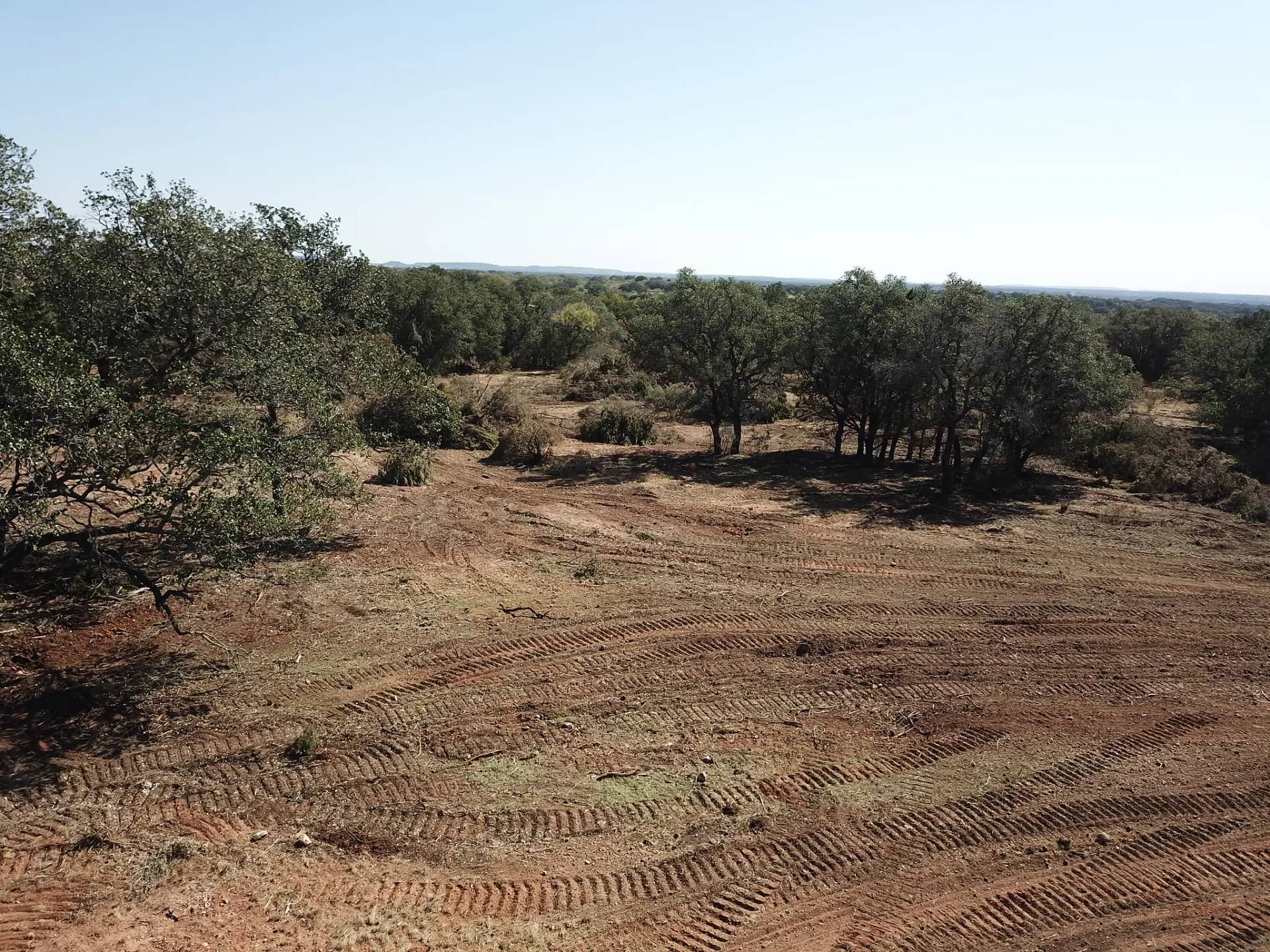
Land clearing: freshly cleared ground marked with track lines, a brush line beyond

Land clearing and forestry mulching in Dallas, TX

Overgrown fence rows on Blackland Prairie clay.

Double L Land Management clears acreage on the edges of Dallas, TX: overgrown fence rows, brushy hay meadows, creek bottoms and homesites on Blackland Prairie clay. We time the work for dry ground, because that clay turns slick and sticky under heavy tracks after rain.

Fully insured · all-new fleet · Weiler M860A mulchers · CAT 320 excavators

The land around Dallas is Blackland Prairie: deep, dark clay that was cotton and hay ground for generations and is now being split into acreage homesites as the metro spreads. Double L does land clearing and forestry mulching on those rural tracts around the edges of the city, from overgrown fence rows to creek bottoms that have closed in.

What Blackland clay means for clearing

Houston Black clay, the official state soil of Texas, is a Blackland Prairie soil. It swells when wet, shrinks and cracks wide when dry, and turns slick and sticky under heavy tracks after rain. That shapes the job. We time the work for dry ground, keep passes to a minimum on the part of the tract you'll build on, and leave mulch on the surface where you want grass back. A well-drained pad matters on this soil too, because standing water and shrink-swell clay are hard on a slab.

The brush is different from the cedar country to the southwest. Fence rows and field edges fill with hackberry, cedar elm, honey locust, bois d'arc and mesquite, often wrapped in greenbriar and poison ivy. Hay meadows that stop getting cut grow up in honey locust and mesquite. Creek bottoms carry bigger pecans, elms and oaks, and there's more cedar on the limestone hills around Cedar Hill and Joe Pool Lake.

Where the acreage is around Dallas

East of the city, out US 80 toward Forney and Terrell and US 175 toward Kaufman, older farm ground is being cut into homesites. South, along I-45 toward Ferris and Ennis and I-35E toward Waxahachie, there are still big hay and cattle tracts. Southwest, along US 67 through Midlothian and Venus, the land rolls up off the flat prairie. Northeast, past Lake Ray Hubbard toward Royse City, it's more of the same black clay, and more of the same overgrown fence lines.
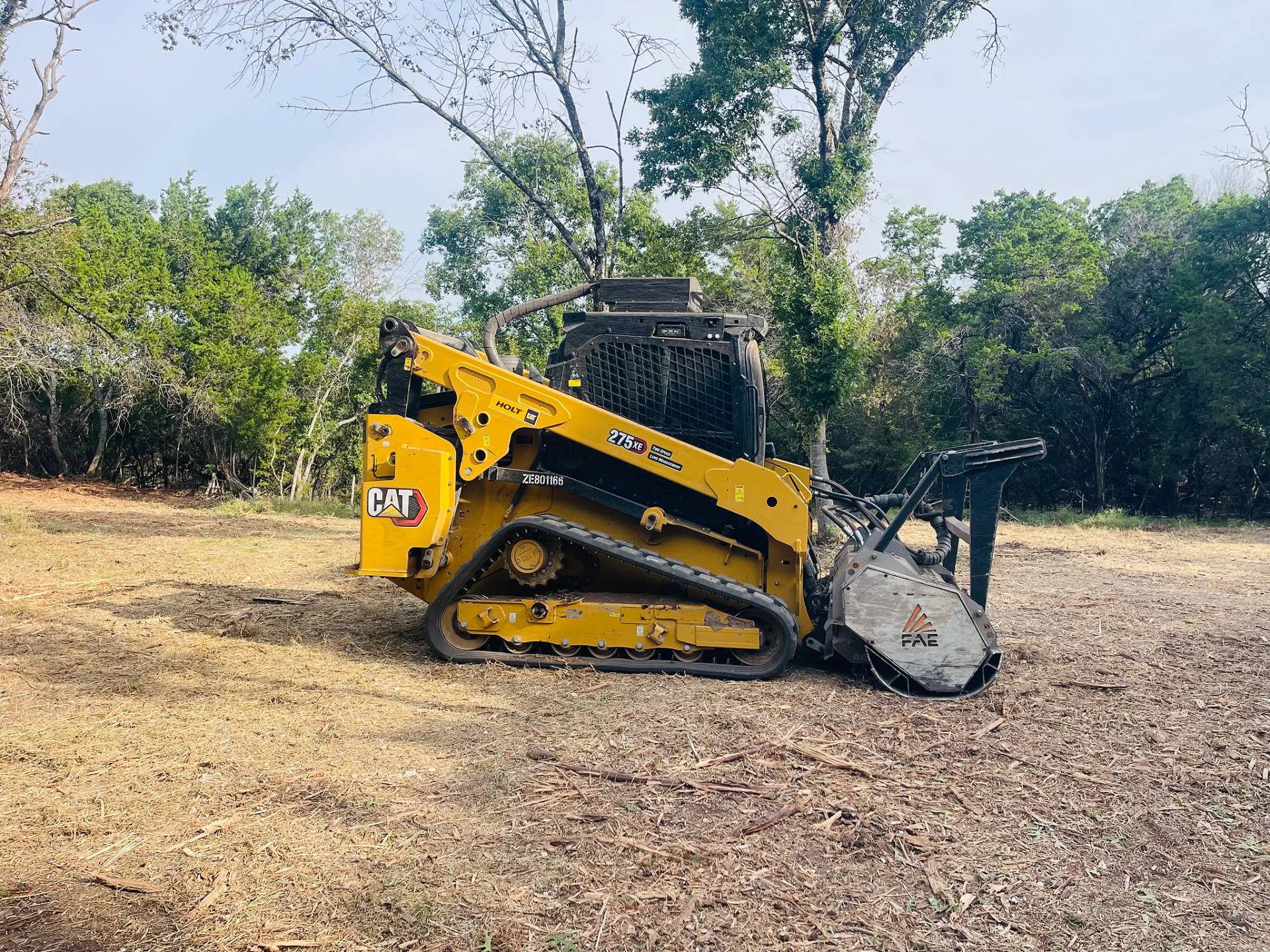
A CAT compact track loader with a mulching head on cleared ground beside a tree line
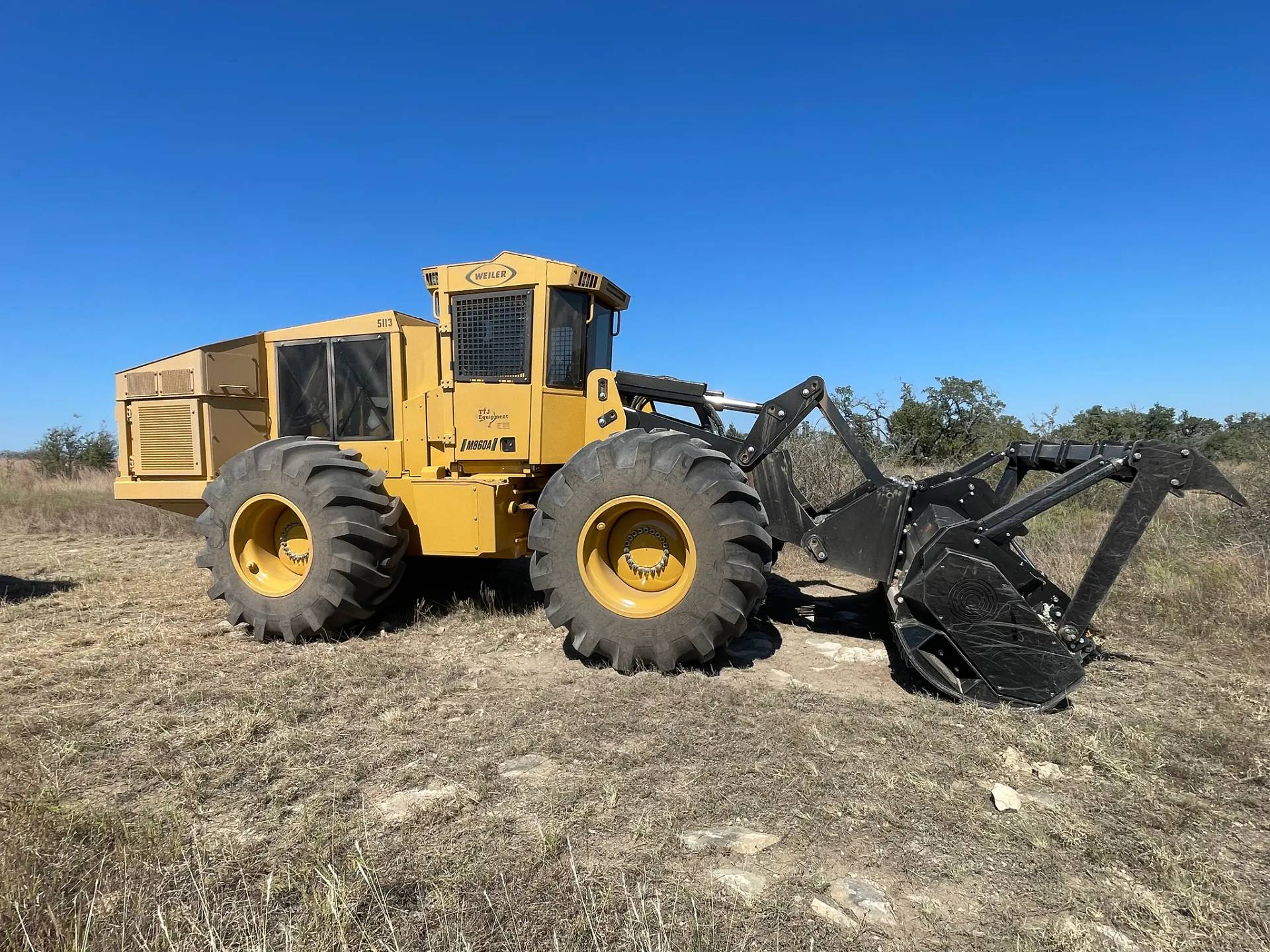
Side profile of a yellow Double L forestry mulcher on a freshly cleared field under a blue sky

Creek land and the Trinity bottoms

South of downtown, the Trinity River runs through a wide bottomland of hardwoods, and its creeks reach out across the prairie in every direction. On an acreage tract, the creek is often the thickest part: hackberry, elm and vine closing over a draw that used to be open. It's also where the soil is softest and floodplain rules may apply, so we ask what's mapped before work starts, and we mulch rather than push wherever we can to keep soil out of the creek.

Inside Dallas city limits, Article X of the development code protects many trees: removing a protected tree takes a tree removal or building permit and mitigation, either replacement planting or a fee, and the permit rule reaches vacant lots and tracts of two acres or more. Several suburbs have tree ordinances of their own, so ask the city before clearing inside any city limits.

Typical jobs on Dallas-area acreage

  • Fence row clearing. Decades of trees and vine taken out of an old fence line so a new fence can go in straight.
  • Homesite and pad prep. Brush and trees cleared, roots pulled, and a pad cut with the dozer for a house, shop or metal building.
  • Meadow reclamation. Honey locust and mesquite cleared out of hay ground so it can be cut and baled again.
  • Creek bottom thinning. Underbrush mulched out of a wooded draw while the big pecans and oaks stay.
  • Pond sites. Clearing and dirt work for a new stock pond on ground that holds water well.

Old fence rows are often a two-machine job here. The dozer pulls the bigger trees and roots that would wreck a new fence line, and the mulcher cleans up the brush and small growth on either side without leaving a windrow of debris across the pasture.

Up from Meridian

Dallas is about 90 miles from our base in Meridian, up SH 174 to Cleburne and then US 67 through Midlothian and Cedar Hill. That puts the south and southwest edges of the metro, around Midlothian, Venus and Waxahachie, closer to Meridian than the north side of Dallas. Michael Myers founded Double L in Meridian in 2021, and the company's own operators, not a hired crew, bring the machines up. On the way up, see our pages for Hill County, Bosque County and Fort Worth.

Tell us where the tract is and what's growing on it. Request a free on-site estimate or call (254) 267-0626.

90 miles from Meridian

About that by road, on SH 174 and US 67. The crew and machines come from our base in Meridian.

SH 174US 67MeridianDallas

Questions from Dallas landowners

Can you clear land around Dallas when the clay is wet?

Not well. Blackland clay turns slick and ruts deeply under heavy equipment after rain, and those ruts bake hard when it dries. We schedule Dallas-area clearing for dry ground, which can mean moving a start date after a wet spell.

Do you clear acreage near Midlothian, Waxahachie and Forney?

Yes. South along I-35E and US 67 there are still big hay and cattle tracts, and east toward Forney older farm ground is being cut into homesites. On both, the usual work is old fence rows, grown-up meadows and a pad for a house or shop, timed for when the black clay is dry.

What's the best way to clear an old fence row on Blackland ground?

Usually a mix. The dozer pulls the larger trees and roots so a new fence can go in clean, and the mulcher takes the brush and small growth on either side without piling debris across the field.

Do I need a permit to clear trees on acreage inside Dallas city limits?

Often, yes. Article X of the Dallas development code requires a tree removal or building permit, plus mitigation, before protected trees come out, and it applies to vacant lots and larger tracts. Many suburbs have their own tree rules. Out in the unincorporated county, the city rules don't apply, though floodplain rules along the creeks still can.

Let’s get your land working for you.

Free on-site estimates for farms, ranches and homesites in Dallas, TX.

CallFree quote