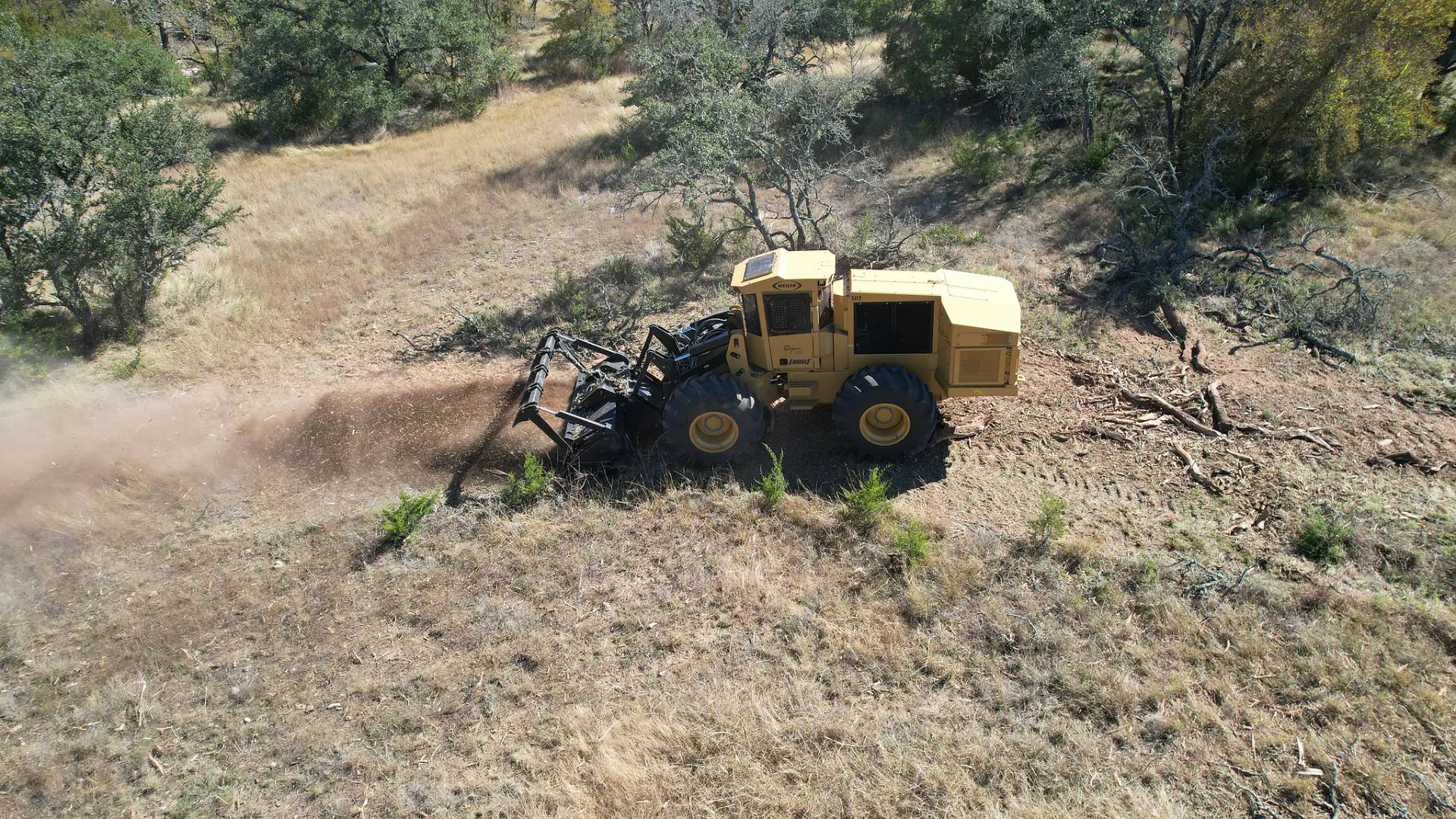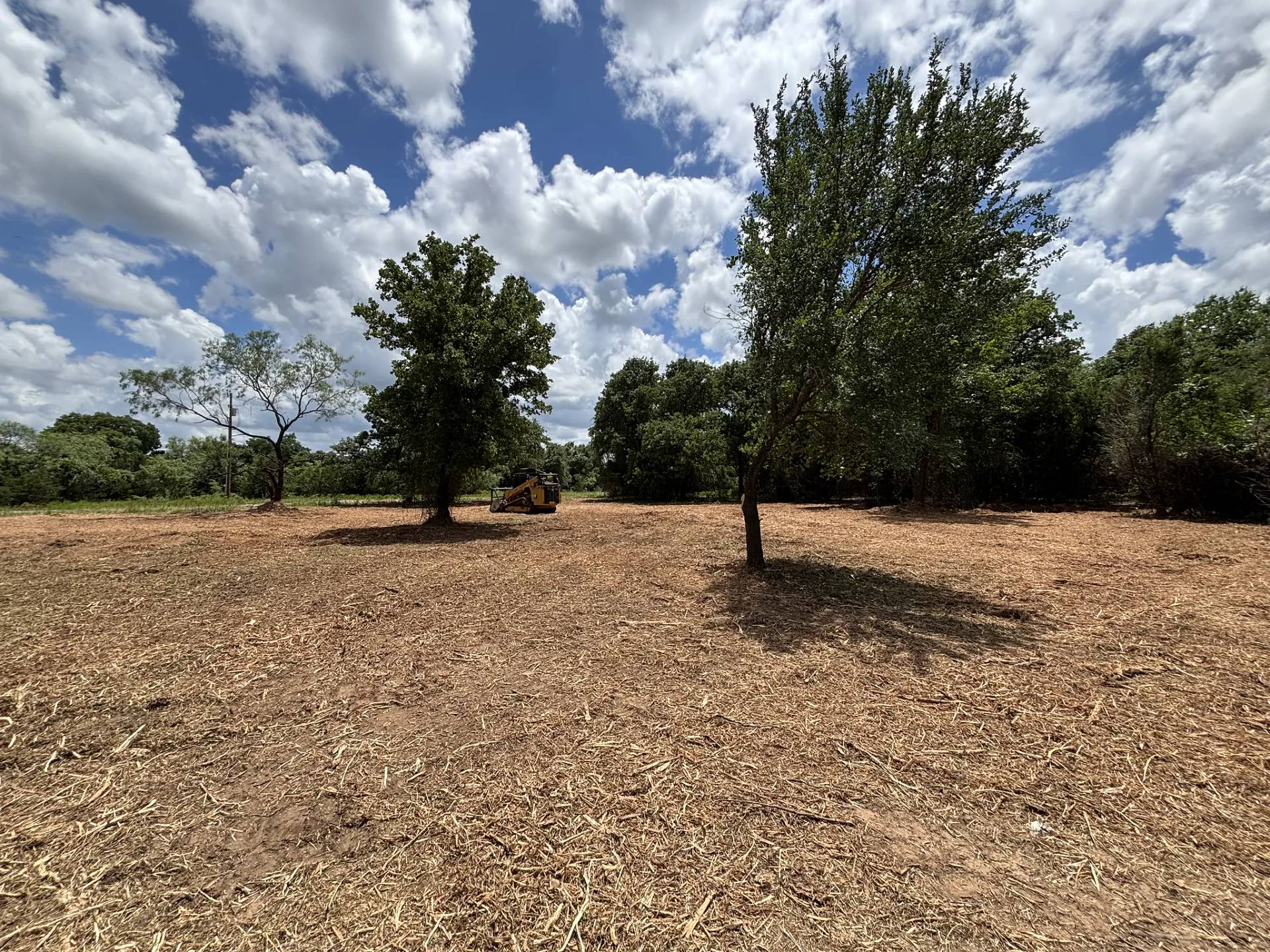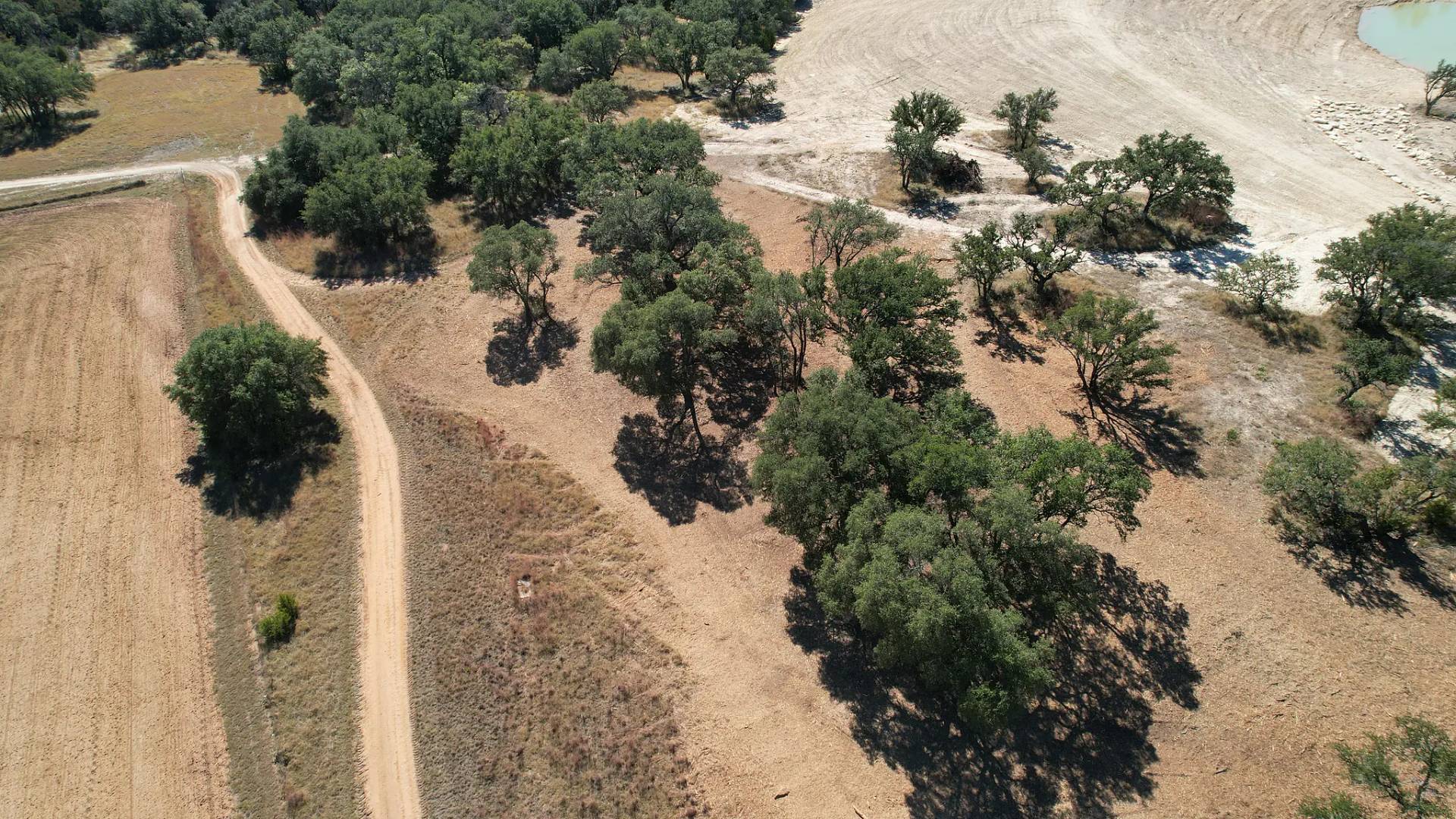
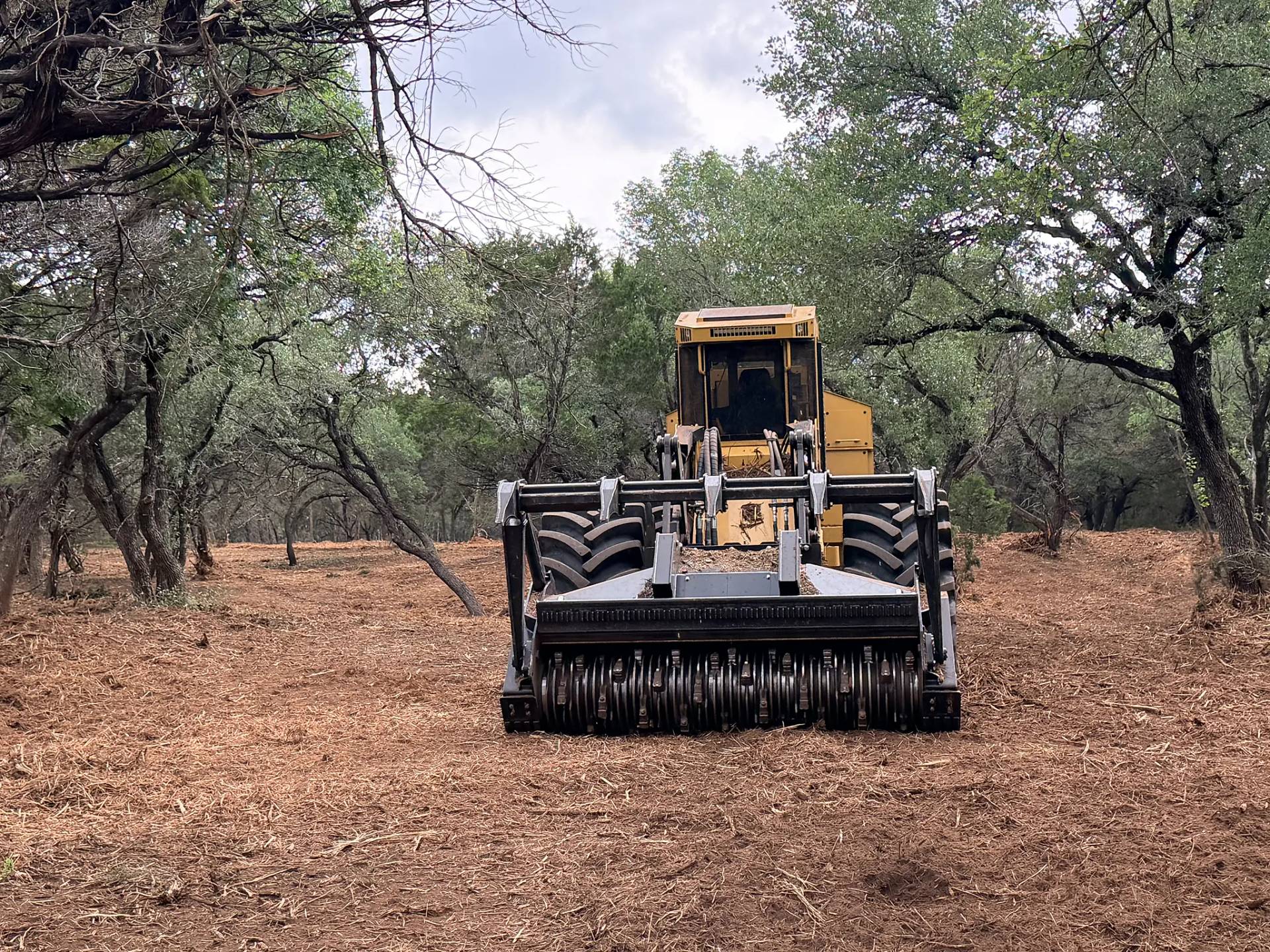
Junction takes its name from where it sits, where the North and South Llano rivers meet, and Kimble County spreads out from there in broken, rocky plateau country: cedar hills, flatter tops and river valleys. It's been run for cattle, sheep and goats since it was settled, and a lot of it is hunted now too. Live oak, shin oak, pecan, walnut and cedar grow among the mesquite. Double L Land Management provides land clearing and forestry mulching across Kimble County, and our crew travels there from Meridian.
Hills, uplands and river valleys
A single Kimble County ranch can take in three kinds of ground, and each one gets cleared a little differently.
- The hills. Shallow, stony clay over rock. Cedar and shin oak hold these slopes. Mulching takes the cedar and leaves the thin soil covered, instead of scraping it off.
- The upland plains. Sandy loam on the flatter tops, where mesquite and brush move into pasture. This is the easiest ground in the county to run a mulcher across.
- The valleys and flood plains. Clay loam along the Llano, the South Llano, Johnson Fork and the forks of the James River. Pecans and walnuts grow here, and clearing is selective, with the big trees and the bank left in place.
Cedar has always been part of the story here
Kimble County has had a cedar oil business since the mid-1940s, and a cedar oil plant has long been part of Junction's economy. On most ranches, though, cedar is simply in the way. It crowds the grass on the hills, fills the draws and closes off the views down to the river. We mulch it in place, so there are no burn piles and nothing to haul off. The mulch layer holds moisture, slows erosion on the slopes and breaks down into the soil.
Hunting, fishing and visitors to the river matter here too, and South Llano River State Park sits just south of Junction. Many places here earn from the land in more than one way, so a clearing plan might cover pasture for livestock, lanes for the hunting season and a cleared homesite above the river.