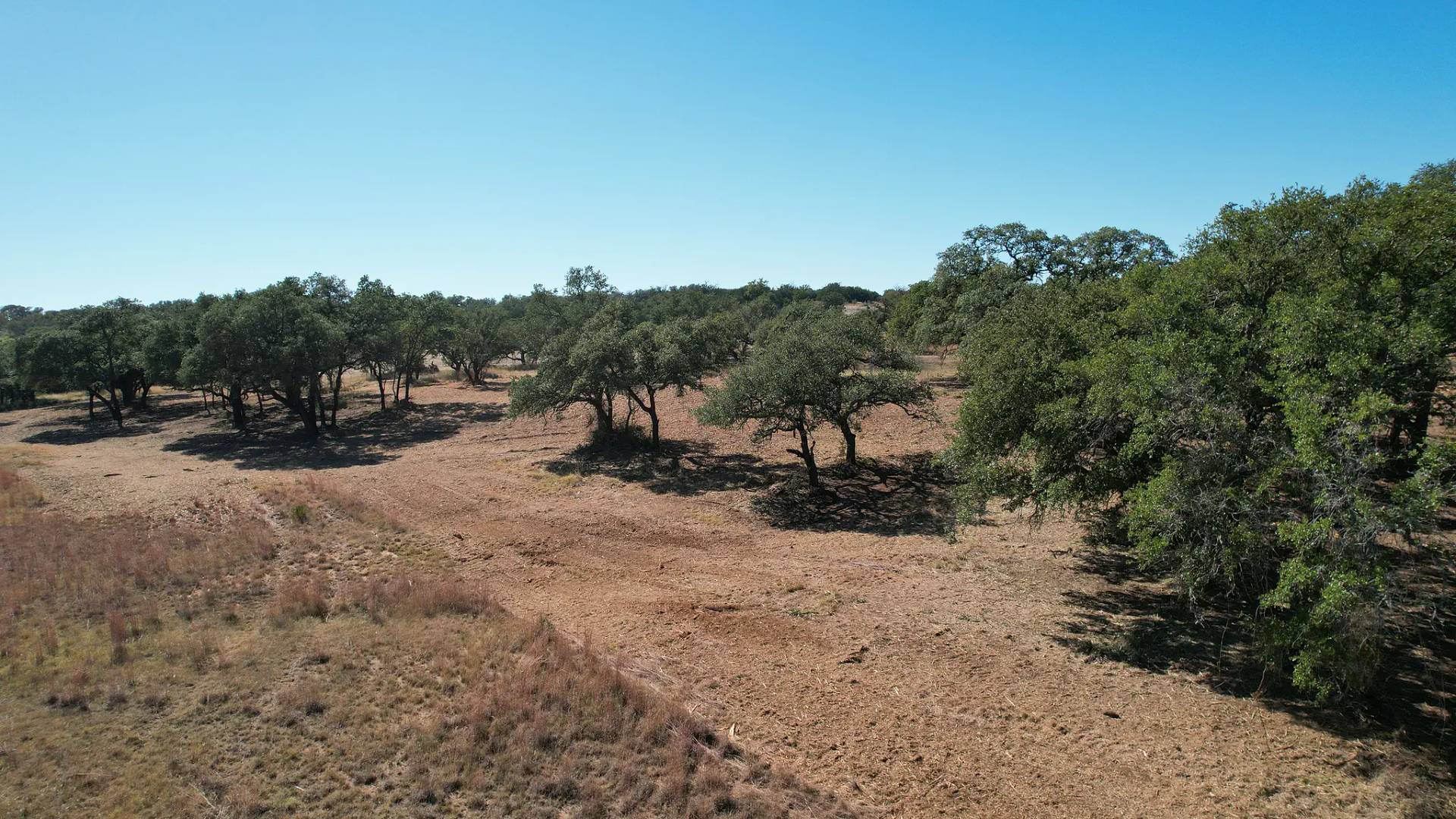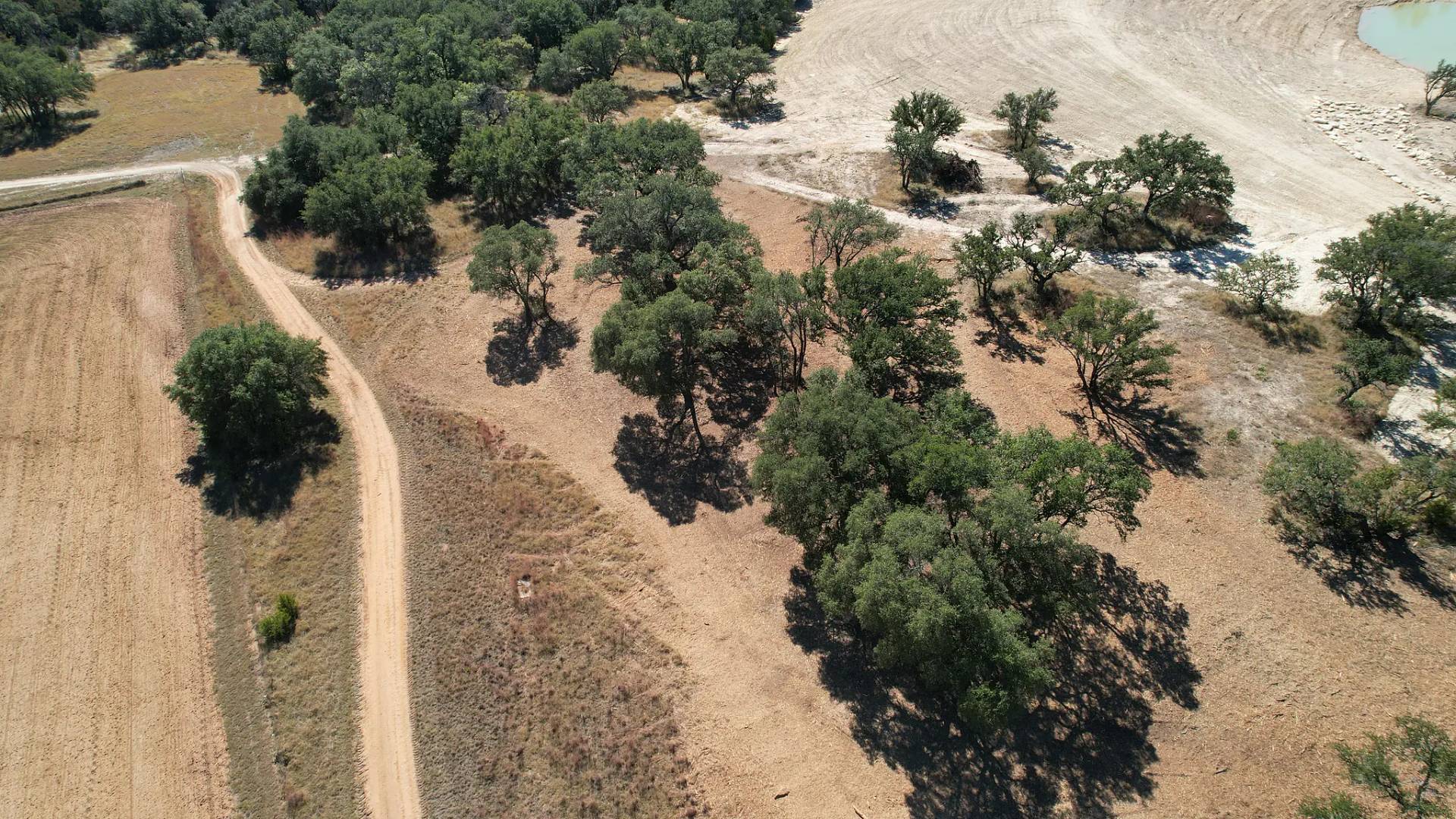
Burnet County sits on the northeastern edge of the Hill Country, where rolling prairie in the north gives way to steep, deeply cut hills in the west and south. Most of the land is still ranch and pasture, and much of it is losing ground to cedar. Double L Land Management provides land clearing and forestry mulching across the county, from pasture outside Burnet to homesites near Lake Buchanan.
Cedar country between two kinds of rock
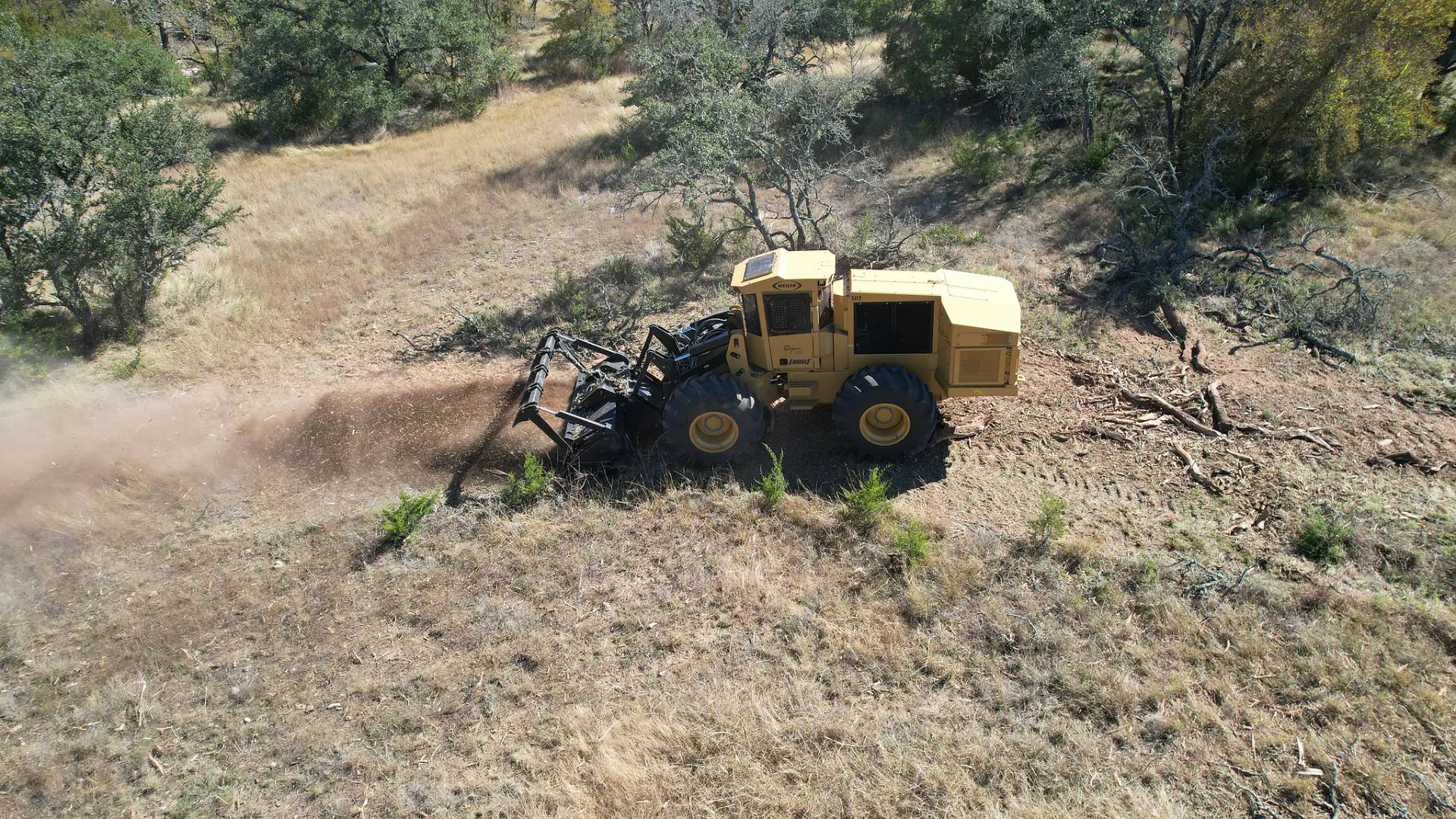
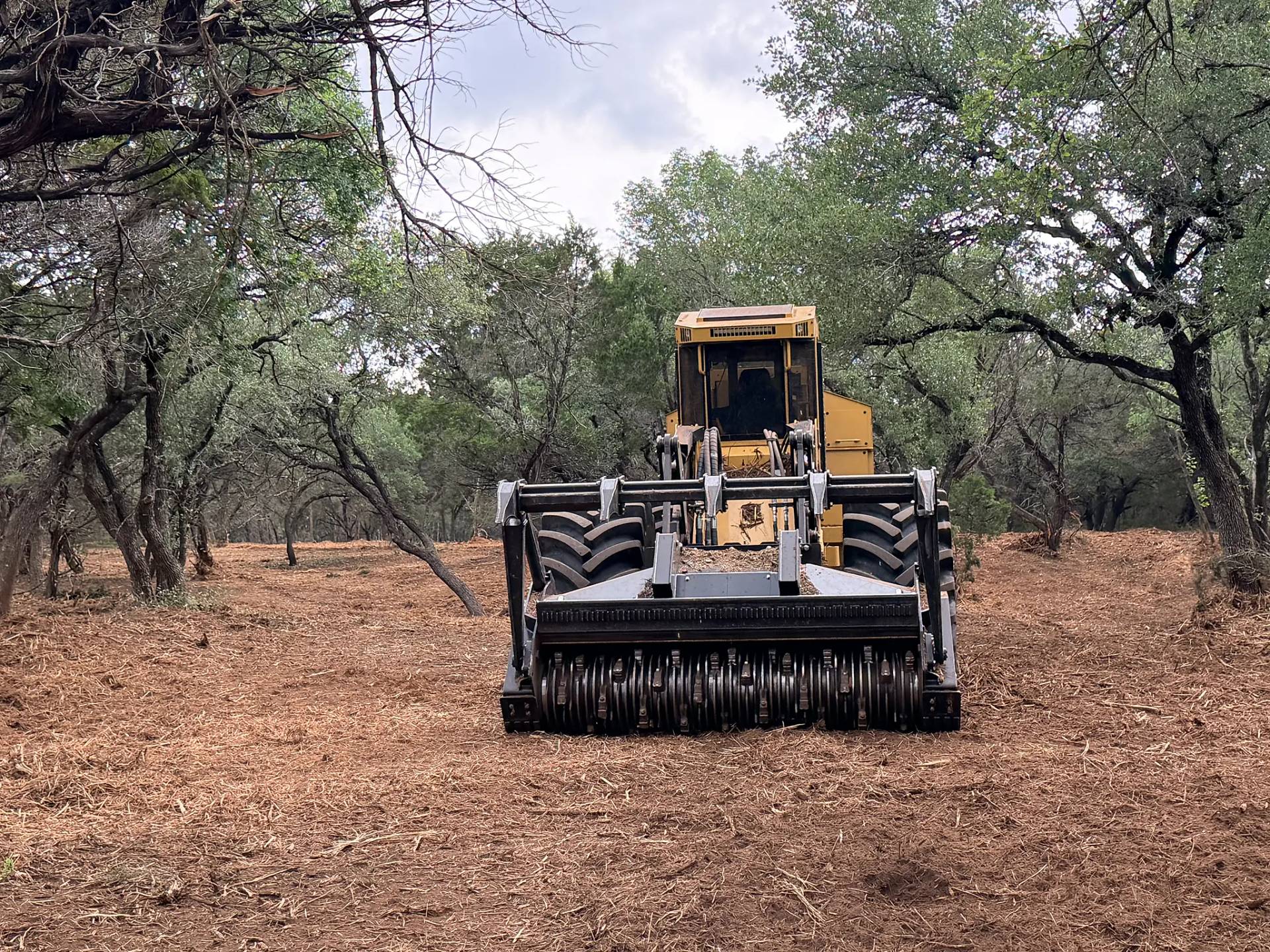
The county straddles two geologies. The east and south are limestone, and the west edges into granite country around Inks Lake and the Colorado River, which forms most of the western boundary before cutting across the south. Limestone hills grow cedar thick and fast. On those slopes a forestry mulcher is usually the right tool, because it takes the cedar and leaves a mat on the thin soil instead of scraping it bare. Where you need open ground for a pad or a road, the CAT D5 dozer does that work, and rock grinding smooths limestone ledges that get in the way.
Old cedar, young cedar and the warbler question
Not all cedar in Burnet County is the same. Young cedar that has crowded into an old pasture is the usual target. Old, tall Ashe juniper mixed with oaks in the canyons is different: it's nesting habitat for the golden-cheeked warbler, a federally endangered songbird, and the Balcones Canyonlands National Wildlife Refuge was set up partly in Burnet County to protect it. If your property has stands like that, check with the U.S. Fish and Wildlife Service before you clear them. We'll point out on the site walk which cedar looks like the young invader and which looks like the old woodland, so you can make that call before any work starts.